FIFA World Cup Betting Guide: Learn How to Bet on World Cup Matches and Odds

Written by: Eddie Griffin
Last Update: Sun Jul 19, 2026, 9:19 pm ET
Read Time: 19 minutes
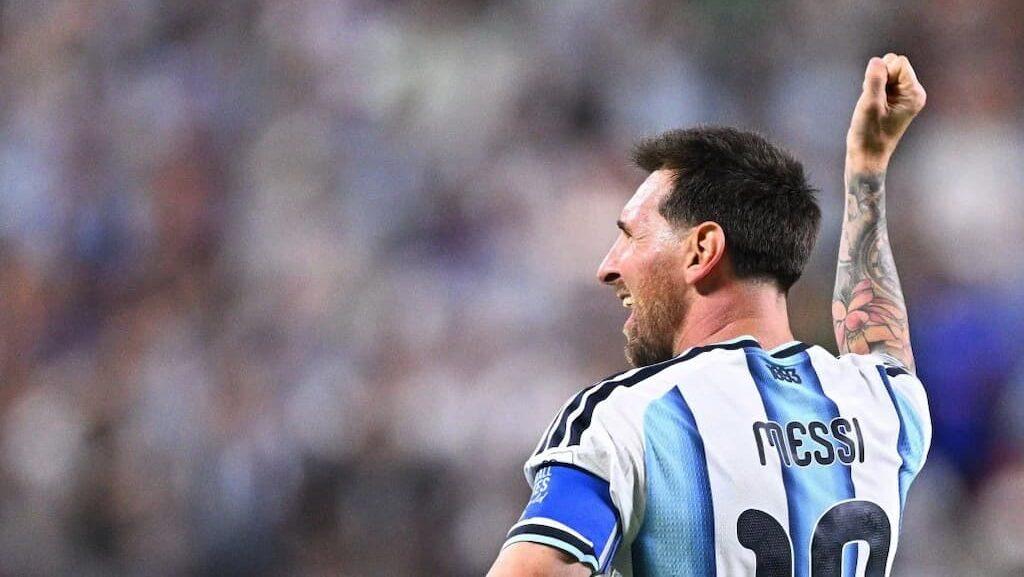
The FIFA World Cup is the biggest event in international soccer and one of the most heavily bet sporting competitions in the world. Held once every four years, the tournament draws global attention from casual fans and experienced bettors alike.
In fact, top online sportsbooks such as Lucky Rebel, BetOnline, and Everygame drew more betting interest than usual for the 2026 edition of the tournament, which took place in the United States, Canada, and Mexico.
From futures odds posted well in advance to daily match odds and live betting during the knockout rounds, the World Cup offers unmatched depth and variety. The limited number of matches, neutral venues, and intense public interest all play a role in how sportsbooks price lines and how value emerges.
This guide provides a comprehensive overview of the FIFA World Cup and World Cup betting. It focuses on core concepts that apply to every tournament, and it is where you can find links to a wealth of our content for the 2026 World Cup.
- World Cup Content by Betting News
- 2026 FIFA World Cup Picks
- World Cup Knockout Stage Schedule & Results
- 2026 FIFA World Cup Winner Odds
- 2026 FIFA World Cup Golden Boot Odds
- Where to Bet on the World Cup
- 2026 World Cup Information
- Popular World Cup Betting Markets
- World Cup Betting Strategy & Tips
- World Cup History
- World Cup Format
- Conclusion
- FAQ

Check Out Our 2026 FIFA World Cup Content
World Cup Group Picks and Predictions
- Groups A & B Picks & Predictions
- Picks & Predictions for Groups C & D
- Groups E & F Picks & Predictions
- Picks & Predictions for Groups G & H
- Groups I & J Picks & Predictions
- Picks & Predictions for Groups K & L
Other World Cup Content
2026 FIFA World Cup Group Stage Schedule »
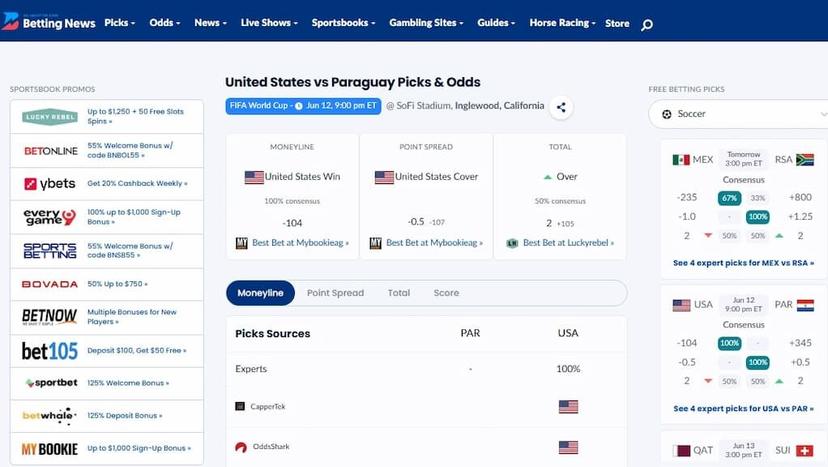
Get 2026 FIFA World Cup Picks from Betting News
Round of 16
Saturday, July 4
- Canada vs. Morocco Expert Picks & Predictions (Nate Hornung)
- Paraguay vs. France Expert Picks & Predictions (Nate Hornung)
Sunday, July 5
- Brazil vs. Norway Expert Picks & Predictions (Nate Hornung)
- Mexico vs. England Expert Picks & Predictions (Nate Hornung)
Monday, July 6
- Best World Cup Player Prop Bets for Monday, July 6 (BTP)
- Portugal vs. Spain Expert Picks & Predictions (Nate Hornung)
- United States vs. Belgium Expert Picks & Predictions (Nate Hornung)
Tuesday, July 7
- Best World Cup Player Prop Bets for Tuesday, July 7 (BTP)
- Argentina vs. Egypt Expert Picks & Predictions (Nate Hornung)
- Switzerland vs. Colombia Expert Picks & Predictions (Nate Hornung)
Quarterfinals
Thursday, July 9
- Best Player Prop Bets for France vs. Morocco (BTP)
- France vs. Morocco Expert Picks & Predictions (Nate Hornung)
Friday, July 10
- Best Player Prop Bets for Spain vs. Belgium (BTP)
- Spain vs. Belgium Expert Picks & Predictions (Nate Hornung)
Saturday, July 11
- Norway vs. England Expert Picks & Predictions (Nate Hornung)
- Argentina vs. Switzerland Expert Picks & Predictions (Nate Hornung)
Semifinals
Tuesday, July 14
- France vs. Spain Expert Picks & Predictions (Nate Hornung)
- Best Player Prop Bets for France vs. Spain (BTP)
Wednesday, July 15
- England vs. Argentina Expert Picks & Predictions (Nate Hornung)
- Best Player Prop Bets for England vs. Argentina (BTP)
Bronze Final – Saturday, July 18
Final – Sunday, July 19
View All World Cup Expert Picks & Predictions »
Many of Nate's tournament takes and tips will be on the website, but he and others will add their thoughts on his show, The Morning Spread, as well as other Betting News Network shows such as Afternoon Betspresso.
Along with the expert picks from our content team, you will also find World Cup consensus picks for each match on the site. As with our other soccer consensus picks, these picks are aggregated from reputable soccer betting sources, and they will match up with updated odds from Lucky Rebel, BetOnline, and other top World Cup betting sites to give bettors a clearer sense of where sharp and public sentiment may align or differ.
Round of 16
Saturday, July 4
- Canada vs. Morocco Consensus Picks, Odds, Props & Stats
- Paraguay vs. France Consensus Picks, Odds, Props & Stats
Sunday, July 5
- Brazil vs. Norway Consensus Picks, Odds, Props & Stats
- Mexico vs. England Consensus Picks, Odds, Props & Stats
Monday, July 6
- Portugal vs. Spain Consensus Picks, Odds, Props & Stats
- United States vs. Belgium Consensus Picks, Odds, Props & Stats
Tuesday, July 7
- Argentina vs. Egypt Consensus Picks, Odds, Props & Stats
- Switzerland vs. Colombia Consensus Picks, Odds, Props & Stats
Quarterfinals
Thursday, July 9
Friday, July 10
Saturday, July 11
- Norway vs. England Consensus Picks, Odds, Props & Stats
- Argentina vs. Switzerland Consensus Picks, Odds, Props & Stats
Semifinals
Tuesday, July 14
Wednesday, July 15
Bronze Final – Saturday, July 18
Final – Sunday, July 19
2026 World Cup Knockout Stage Schedule and Results
Round of 32 Schedule & Results
Shootout results are in parentheses. AET = After Extra Time.
| Date | Matchup/Result | Time (ET) | TV (U.S.) |
| June 28 | Canada 1, South Africa 0 | 3:00 p.m. | FOX/Telemundo |
| June 29 | Brazil 2, Japan 1 | 1:00 p.m. | FOX/Telemundo |
| June 29 | Paraguay 1 (4), Germany 1 (3) | 4:30 p.m. | FOX/Telemundo |
| June 29 | Morocco 1 (3), Netherlands 1 (2) | 9:00 p.m. | FOX/Telemundo |
| June 30 | Norway 2, Ivory Coast 1 | 1:00 p.m. | FOX/Telemundo |
| June 30 | France 3, Sweden 0 | 5:00 p.m. | FOX/Telemundo |
| June 30 | Mexico 2, Ecuador 0 | 9:00 p.m. | FOX/Telemundo |
| July 1 | England 2, DR Congo 1 | 12:00 p.m. | FOX/Telemundo |
| July 1 | Belgium 3, Senegal 2 (AET) | 4:00 p.m. | FS1/Telemundo |
| July 1 | United States 2, Bosnia & Herzegovina 0 | 8:00 p.m. | FOX/Telemundo |
| July 2 | Spain 3, Austria 0 | 3:00 p.m. | FOX/Telemundo |
| July 2 | Portugal 2, Croatia 1 | 7:00 p.m. | FOX/Telemundo |
| July 2 | Switzerland 2, Algeria 0 | 11:00 p.m. | FS1/Telemundo |
| July 3 | Egypt 1 (4), Australia 1 (2) | 2:00 p.m. | FOX/Telemundo |
| July 3 | Argentina 3, Cape Verde 2 (AET) | 6:00 p.m. | FOX/Telemundo |
| July 3 | Colombia 1, Ghana 0 | 9:30 p.m. | FOX/Telemundo |
Round of 16 Schedule & Results
| Date | Matchup/Result | Time (ET) | TV (U.S.) |
| July 4 | Morocco 3, Canada 0 | 1:00 p.m. | FOX/Telemundo |
| July 4 | France 1, Paraguay 0 | 5:00 p.m. | FOX/Telemundo |
| July 5 | Norway 2, Brazil 1 | 4:00 p.m. | FOX/Telemundo |
| July 5 | England 3, Mexico 2 | 8:00 p.m. | FOX/Telemundo |
| July 6 | Spain 1, Portugal 0 | 3:00 p.m. | FOX/Telemundo |
| July 6 | Belgium 4, United States 1 | 8:00 p.m. | FOX/Telemundo |
| July 7 | Argentina 3, Egypt 2 | 12:00 p.m. | FOX/Telemundo |
| July 7 | Switzerland 0 (4), Colombia 0 (3) | 4:00 p.m. | FOX/Telemundo |
Quarterfinal Schedule & Results
| Date | Matchup/Result | Time (ET) | TV (U.S.) |
| July 9 – Quarterfinal 1 | France 2, Morocco 0 | 4:00 p.m. | FOX/Telemundo |
| July 10 – Quarterfinal 2 | Spain 2, Belgium 1 | 3:00 p.m. | FOX/Telemundo |
| July 11 – Quarterfinal 3 | England 2, Norway 1 (AET) | 5:00 p.m. | FOX/Telemundo |
| July 11 – Quarterfinal 4 | Argentina 3, Switzerland 1 (AET) | 9:00 p.m. | FOX/Telemundo |
Semifinal Schedule & Results
| Date | Matchup/Result | Time (ET) | TV (U.S.) |
| July 14 – Semifinal 1 | Spain 2, France 0 | 3:00 p.m. | FOX/Telemundo |
| July 15 – Semifinal 2 | Argentina 2, England 1 | 3:00 p.m. | FOX/Telemundo |
Third-Place Match & Final
| Date | Matchup/Result | Time (ET) | TV (U.S.) |
| July 18 – Bronze Final | England 6, France 4 | 5:00 p.m. | FOX/Telemundo |
| July 19 – Final | Spain 1, Argentina 0 (AET) | 3:00 p.m. | FOX/Telemundo |
Where to Bet on the FIFA World Cup: Best 2026 World Cup Betting Sites
Established online sportsbooks will offer full coverage of the FIFA World Cup, but the quality of that coverage may vary widely.
For the 2026 World Cup, top U.S. sportsbooks such as Lucky Rebel, BetOnline, and Everygame will provide moneyline, spread (a.k.a. handicap or goal line), and over/under odds for every match, a wide range of futures bets and prop bets, and live betting.
World Cup betting attracts significant public action, which often leads to pricing differences across sportsbooks. Line shopping is especially important for futures, group-stage bets, and totals, where small differences in odds can translate into meaningful long-term value.
For this reason, we suggest checking out and signing up at multiple World Cup betting sites. Maintaining accounts at multiple sportsbooks gives bettors flexibility and access to better prices throughout the tournament.
As is the case with other marquee events, such as the Super Bowl, NBA Finals, Stanley Cup, and World Series, many of the top sports betting sites have special bonuses, promotions, and contests for the World Cup. That includes BetOnline's $25,000 World Cup Pick'Em and Everygame's World Cup welcome package that gives players up to $1500 across two deposits.
Best Sportsbook Bonuses, Promos & Contests for the World Cup »
What to Know About the 2026 FIFA World Cup
The 2026 FIFA World Cup introduced several structural changes, most notably the expansion from 32 to 48 teams. This increased the total number of matches and broadens international representation.
Despite these changes, the core principles of World Cup betting will remain consistent. Those core principles will also be key to how bettors should approach the 2030 World Cup, which will have three co-hosts (Morocco, Portugal, and Spain) but also have single matches hosted in Argentina, Paraguay, and Uruguay in honor of the 100th anniversary of the first World Cup.
Tournament Groups
Here are the 12 groups for the 2026 FIFA World Cup. Teams who advanced to the knockout phase are in bold.
| Group | Teams |
| Group A | Mexico, South Africa, South Korea, Czech Republic |
| Group B | Canada, Bosnia and Herzegovina, Qatar, Switzerland |
| Group C | Brazil, Morocco, Haiti, Scotland |
| Group D | United States, Paraguay, Australia, Turkey |
| Group E | Germany, Curaçao, Ivory Coast, Ecuador |
| Group F | Netherlands, Japan, Sweden, Tunisia |
| Group G | Belgium, Egypt, Iran, New Zealand |
| Group H | Spain, Cape Verde, Saudi Arabia, Uruguay |
| Group I | France, Senegal, Norway, Iraq |
| Group J | Argentina, Algeria, Austria, Jordan |
| Group K | Portugal, DR Congo, Uzbekistan, Colombia |
| Group L | England, Croatia, Ghana, Panama |
Tournament Schedule and Format
Here's an overview of the timing for each round of the 2026 FIFA World Cup:
| Round | Dates | Details |
| Group Stage | June 11–27, 2026 | 72 matches across 12 groups. Each team plays three matches, with points determining advancement. The top two finishers in each World Cup group plus the eight best third-place teams will advance to the Round of 32. |
| Round of 32 | June 28–July 3, 2026 | 32 teams compete in single-elimination, win-or-go-home matches. |
| Round of 16 | July 4–7, 2026 | Sixteen teams advance from the Round of 32. |
| Quarter-Finals | July 9–11, 2026 | The eight remaining teams face off. |
| Semi-Finals | July 14–15, 2026 | The final four teams compete for a place in the final. |
| Third Place Playoff | July 18, 2026 | The two semifinal losers face off for third place. |
| Final | July 19, 2026 | The 2026 FIFA World Cup Final will take place at MetLife Stadium in East Rutherford, New Jersey. |
Tournament Venues and Locations
Knowing where 2026 World Cup matches, as well as the timing of each match, will be played will be crucial to handicapping the tournament. Because of when the tournament will be taking place, weather conditions and physical condition could come into play.
Most of the 104 FIFA World Cup matches will take place in the United States. Eleven U.S. cities and stadiums will host matches, while the remaining matches will be split between Guadalajara, Mexico City, Monterrey, Toronto, and Vancouver.
United States — 11 Cities (78 matches)
This will be the second time that the U.S. has hosted FIFA World Cup matches. The country was the sole host for the 1994 tournament, which was won by Brazil.
| City / Stadium | Matches |
| Dallas, Texas – AT&T Stadium (Arlington) | 9 (semifinal host) |
| East Rutherford, New Jersey – MetLife Stadium | 8 (2026 FIFA World Cup Final location) |
| Los Angeles, California – SoFi Stadium (Inglewood) | 8 |
| Atlanta, Georgia – Mercedes-Benz Stadium | 8 (semifinal host) |
| Boston, Massachusetts – Gillette Stadium (Foxborough) | 7 |
| Houston, Texas – NRG Stadium | 7 |
| Miami, Florida – Hard Rock Stadium (Miami Gardens) | 7 (host of third-place game) |
| Kansas City, Missouri – Arrowhead Stadium | 6 |
| Philadelphia, Pennsylvania – Lincoln Financial Field | 6 |
| Seattle, Washington – Lumen Field | 6 |
| Santa Clara, California – Levi's Stadium | 6 |
Mexico — 3 Cities (13 matches)
Mexico will host FIFA World Cup matches for the third time, after hosting the tournament solo in 1970 and 1986 (a tournament that was originally set to be held in Colombia).
| City / Stadium | Matches |
| Mexico City – Estadio Azteca | 5 |
| Monterrey – Estadio BBVA (Guadulupe) | 4 |
| Guadalajara – Estadio Akron (Zapopan) | 4 |
Canada — 2 Cities (13 matches)
| City / Stadium | Matches |
| Vancouver – BC Place | 7 |
| Toronto – BMO Field | 6 |
Complete World Cup Results & Standings »
Popular FIFA World Cup Betting Markets
Similar to the Super Bowl, sportsbooks significantly expand their soccer betting menus during the World Cup, offering more markets than at almost any other time.
Futures betting allows bettors to wager on outcomes such as the World Cup winner, what the semifinal of final matchups will be, how far teams will advance in the tournament, group winners and standings, top goalscorer, most assists, and Golden Ball (best player of the tournament) winner. These markets are available well before the tournament begins and adjust rapidly as matches are played.
Match betting forms the core of World Cup wagering. As with NFL betting, NBA betting, UEFA Champions League betting, and betting on other major team sports and leagues, match sides and totals are popular for the World Cup.
Match and tournament player and team props, including both teams to score bets, top goalscorer, cards, corners, and penalties, add further betting opportunities.
For bettors who want to watch and wager at the same time, live betting is available for every match and often includes dozens of in-play markets.
Live Betting
Live betting plays a major role during the World Cup, with many sportsbooks offering extensive in-play coverage for every match. Odds adjust continuously based on game state, possession, substitutions, and match tempo.
Late-game pressure frequently creates opportunities in live totals and next-goal markets, particularly when trailing teams push forward aggressively. Because prices move quickly, having a clear live betting approach helps avoid reactive or emotional wagers.
FIFA World Cup Betting Strategy
Betting on the World Cup and other international tournaments requires a different approach than weekly wagering on domestic leagues and competitions such as the English Premier League or Major League Soccer.
The structure of the tournament, the limited number of matches, and the influence of public money all create a unique environment where discipline and timing matter as much as analysis.
Understand the Difference Between International and Club Soccer
National teams do not have the same level of cohesion as club sides. Players come together for short periods, often with limited time to build chemistry or implement complex systems.
That lack of familiarity can lead to slower starts, inconsistent performances, and results that do not always align with expectations. It also increases the unpredictability of tournaments such as the World Cup. That unpredictability can significantly impact knockout matches, as a single moment can send a favorite tumbling out and an underdog into the spotlight.
For bettors, this means being cautious about projecting club form directly onto international play.
Be Patient During the Group Stage
Early tournament matches tend to be more conservative than many bettors expect.
Teams are often focused on avoiding mistakes and securing points rather than pushing aggressively for wins. A draw can be a perfectly acceptable result, especially in the opening round of group play.
That dynamic can create value in game unders, first-half unders, and live betting odds after slow starts.
Understanding why matches play out this way is key to staying ahead of the market.
Expect Unpredictability in Knockout Matches
Once the tournament moves into the knockout rounds, unpredictability increases significantly.
The introduction of single-elimination play leaves no room for recovery. Underdogs become more dangerous, favorites play tighter, and matches are often decided by set pieces, individual errors, and penalty shootouts.
From a betting perspective, this is where blindly backing favorites can become expensive. Odds often reflect reputation as much as performance, which can create value on the other side.
Recognize the Impact of Public Betting
The World Cup draws one of the largest betting audiences in sports. Casual money tends to flow heavily toward well-known teams and star players.
That demand can inflate lines on popular sides, especially teams like Brazil, England, France, Argentina, and Spain.
This does not mean those teams will not win. It means you often get much shorter odds on these teams to win.
The sharper approach is to:
- Question whether the price reflects reality
- Look for value on less popular teams
- Avoid chasing narratives driven by hype
Prioritize Line Shopping
Because of the volume of betting activity, odds can vary more than usual across sportsbooks during the World Cup.
Individually, those differences might look small. But they add up over time, especially in futures markets, odds for group stage games, and over/under odds throughout the tournament.
Line shopping across multiple reputable sportsbooks will help you consistently get better numbers. That is one of the few edges that remains reliable throughout the tournament.
Be Strategic with Futures Betting
World Cup futures move constantly based on results and public perception. Because of this, timing matters just as much as selection with placing bets.
Early odds can offer value, but they are not always the best entry point. Markets tend to overreact to individual matches, especially when high-profile teams underperform or stand out.
That creates opportunities to buy into strong teams after a slow start, as well as avoid overpaying for teams coming off dominant wins.
Approach Live Betting with a Plan
Live betting will be everywhere during the World Cup, but more options don't automatically mean more opportunity.
The pace of in-play markets makes it easy to fall into reactive betting. The key is to anticipate how a match is likely to unfold and look for spots where the live odds don't fully reflect that.
Late-game situations, especially when a team is chasing a result, can create value in totals and next goal markets.
However, discipline is key. A lack of discipline can lead to making poor choices that can quickly deplete a bankroll.
Stay Selective
The World Cup schedule is dense, with matches played almost every day.
Therefore, there will always be another game, another market, another angle. The most successful bettors wait for spots where the price and the situation align.
FIFA World Cup History and Information
A Brief History of the FIFA World Cup
The FIFA World Cup has evolved from a small international competition into the most watched and widely followed sporting event in the world.
First held in 1930, the tournament began with just 13 teams and a far more regional feel. Over time, it expanded in both size and global reach, becoming a true showcase of international talent and national identity.
Despite that growth, success at the World Cup has remained relatively concentrated. Argentina, Brazil, France, Germany, and Italy have accounted for most World Cup winners and runners-up. That quintet has consistently produced elite talent, been supported by strong footballing infrastructure, and drawn on significant tournament experience.
Each era of the World Cup has been shaped by different styles and dominant teams. Brazil's attacking flair, Italy's defensive discipline, Germany's efficiency, and Spain's possession-based control have all defined periods of international play.
At the same time, the tournament has produced some of the most unpredictable and unforgettable moments in sports. Underdog runs, shocking upsets, and dramatic finals are part of what makes the World Cup unique. They are also part of what makes it so challenging from a betting perspective.
History provides valuable context, but it doesn't guarantee outcomes. National teams operate in cycles, and each tournament introduces new variables that can shift the balance of power.
FIFA World Cup Winners
| Year | Winner | Final Score | Runner-Up |
| 2026 | Spain | 1-0 (After extra time) | Argentina |
| 2022 | Argentina | 3–3 (Argentina won 4–2 on penalties) | France |
| 2018 | France | 4–2 | Croatia |
| 2014 | Germany | 1–0 (AET) | Argentina |
| 2010 | Spain | 1–0 (AET) | Netherlands |
| 2006 | Italy | 1–1 (Italy won 4–3 on penalties) | France |
| 2002 | Brazil | 2–0 | Germany |
| 1998 | France | 3–0 | Brazil |
| 1994 | Brazil | 0–0 (Brazil won 3–2 on penalties) | Italy |
| 1990 | West Germany | 1–0 | Argentina |
| 1986 | Argentina | 3–2 | West Germany |
| 1982 | Italy | 3–1 | West Germany |
| 1978 | Argentina | 3–1 (AET) | Netherlands |
| 1974 | West Germany | 2–1 | Netherlands |
| 1970 | Brazil | 4–1 | Italy |
| 1966 | England | 4–2 (AET) | West Germany |
| 1962 | Brazil | 3–1 | Czechoslovakia |
| 1958 | Brazil | 5–2 | Sweden |
| 1954 | West Germany | 3–2 | Hungary |
| 1950 | Uruguay | 2–1 (Round Robin) | Brazil |
| 1938 | Italy | 4–2 | Hungary |
| 1934 | Italy | 2–1 | Czechoslovakia |
| 1930 | Uruguay | 4–2 | Argentina |
While historical FIFA World Cup success provides useful context, it does not guarantee future results. National teams operate in cycles shaped by generational talent, tactical trends, and managerial philosophy. Bettors should be cautious about relying too heavily on reputation and historical betting trends alone.
Host nations have often enjoyed strong performances, benefiting from familiar conditions, reduced travel, and the lift of playing in the World Cup on home soil. That advantage is typically reflected in futures odds, but it remains an important factor to consider for individual matches.
What Is the Format of the FIFA World Cup?
The FIFA World Cup is preceded by a multi-year qualification process involving national teams from FIFA's six continental confederations. Each confederation is allocated a set number of spots in the final tournament based on region and performance.
The final tournament traditionally begins with a group stage, where teams are divided into groups and play a round-robin schedule. Teams earn three points for a win and one point for a draw, and the top finishers advance to the knockout rounds.
The knockout stage is single elimination. Matches tied after regulation proceed to extra time, which consists of two 15-minute period. If still level after extra time, matches penalty shootouts.
For betting purposes, it is important to understand whether wagers for knockout matches apply to regulation time only or includes extra time and penalties. Soccer odds feature three-way moneylines, which incorporate the draw (in addition to "to win" bets for each team). Three-way moneylines only include regulation (90 minutes plus any added injury/stoppage time), and spreads and totals typically do as well, unless otherwise specified.
Starting in 2026, the World Cup will expand from 32 teams to 48 teams. While the format will evolve, the core structure of group play followed by knockout rounds will remain, preserving the fundamental betting dynamics of the tournament.
Conclusion
The FIFA World Cup combines elite competition with unmatched global interest, creating a betting environment unlike any other. The rarity of the tournament, the influence of public money, and the intensity of knockout play all contribute to unique market behavior.
For bettors who understand the tournament's structure and nuances, the World Cup offers opportunities that reward preparation, discipline, and selective wagering across both pre-match and live markets.
At the same time, it is important to stay disciplined. With dozens of matches and a mountain of betting options available, maintaining a consistent approach is just as important as finding the right picks.