How Do Different Court Surfaces Impact Tennis Betting?

Written by: Eddie Griffin
Last Update: Sat Sep 12, 2026, 3:53 pm ET
Read Time: 13 minutes
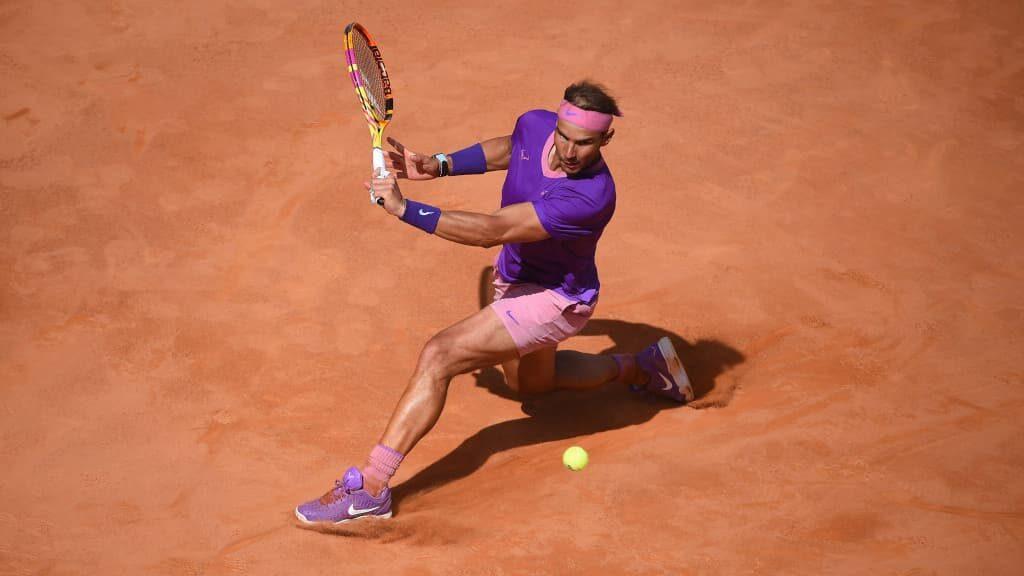
Tennis is played on the same-sized court with the same scoring system no matter where matches take place or the surfaces that they are played on. But changing the surface underneath the players can significantly change how the game is played.
Clay, grass, and hard courts affect the speed and bounce of the ball, player movement, rally length, and the effectiveness of different shots and playing styles. The International Tennis Federation (ITF) even classifies court pace across five categories ranging from slow to fast.
Those differences are important for bettors. A player who looks like a strong favorite based on ranking and recent results may face a much tougher matchup on their least-favored surface. Similarly, a serve that dominates on a fast court may be less effective in slower conditions.
Our tennis betting guide covers the fundamentals of wagering on the sport. Here, we will focus specifically on how court surfaces can affect matches and what bettors should consider when analyzing tennis odds.
Why Does Court Surface Matter in Tennis Betting?
Surface matters because it changes the conditions in which players must execute their games.
Friction between the ball and court affects how much horizontal speed the ball loses after contact with the surface, while other properties influence its bounce. As a result, some courts play faster or slower than others.
Those differences can alter the effectiveness of serves, returns, topspin, flat groundstrokes, defense, and net play. Movement changes as well. Sliding is an important part of clay-court tennis, while grass requires players to adjust to lower and sometimes less predictable bounces.
For bettors, surface should therefore be part of the matchup rather than an isolated statistic.
Knowing that one player has a better career record than another isn't enough. How well have they performed under the conditions they will actually encounter?
How Do Hard Courts Impact Tennis?
Hard courts are the most common of the three major surfaces and are used at both the Australian Open and US Open. However, not all hard courts play identically, and the ITF notes that their specifications and speeds can vary considerably.
Hard courts generally provide a more predictable bounce and occupy something of a middle ground between slower clay and faster grass. This can allow a wide range of playing styles to succeed.
Big servers and aggressive baseliners can benefit from the pace available on faster hard courts, while strong returners and defensive players generally have more time to respond than they would under the quickest grass-court conditions.
For bettors, don't simply label someone a "good hard-court player." Consider the specific conditions and tournament. A player's results on hard courts provide useful information, but the characteristics of the court, matchup, and environment can make one hard-court event different from another.
How Do Clay Courts Impact Tennis?
Clay is generally considered the slowest major tennis surface. The ball loses more speed after hitting the court and typically bounces higher, which can contribute to longer rallies. Sliding is also a fundamental part of movement on clay.
Those characteristics can help players who defend well, construct points patiently, move comfortably on clay, and use heavy topspin. Conversely, some players who depend heavily on quick points and dominant serves may find their usual advantages reduced.
That doesn't mean big servers or aggressive players should automatically be faded on clay. The best players can adapt their games, and individual conditions still matter.
The French Open is the biggest clay-court tournament of the season, but bettors should consider clay performance throughout the schedule. Experience, movement, rally tolerance, and the ability to create and finish points under slower conditions can all provide useful context when evaluating a matchup.
How Do Grass Courts Impact Tennis?
Grass generally sits at the opposite end of the spectrum from clay. It is traditionally a fast surface with a lower, sometimes less predictable bounce, which can shorten points and reward aggressive tennis.
Powerful serves can be particularly effective because returners have less time to react. Flat groundstrokes, strong first-strike tennis, and the ability to finish points quickly can also be valuable. Players must be comfortable moving on grass and dealing with balls that stay lower than they would on clay or many hard courts.
These characteristics make surface-specific experience especially worth considering when betting on Wimbledon and other grass-court tournaments.
But avoid reducing grass analysis to serve strength alone. Returning ability, movement, versatility, and comfort with low balls can separate players who thrive on grass from those whose games don't translate as naturally to the surface.
What About Indoor vs. Outdoor Tennis?
Surface isn't the only part of the playing environment that matters.
Indoor tennis removes variables such as wind and rain, creating more controlled conditions. Outdoor matches can be affected by weather factors such as wind, temperature, humidity, sunlight, and other environmental conditions.
That distinction can matter even when two tournaments are technically played on the same type of hard court.
A player who relies on precise serving and aggressive ball striking may appreciate predictable indoor conditions, while other players may be more comfortable adjusting to outdoor variables.
Bettors should therefore avoid treating "hard court" as the complete description of the conditions. Indoor or outdoor setting, court speed, weather, and even the specific tournament can provide additional context.
How Do Playing Styles Match Up with Different Surfaces?
One of the most useful ways to incorporate surface into tennis betting is to consider how it interacts with each player's style.
Slower surfaces can provide defenders more time to retrieve shots and force opponents to hit additional balls. Players who generate heavy topspin can also benefit from the higher bounce associated with clay.
Faster, lower-bouncing conditions can reward players who serve well, take the ball early, hit flatter shots, and attack before opponents have time to establish themselves in rallies.
Hard courts can accommodate a broader range of styles, but court speed can shift the advantage toward offense or defense.
These aren't rigid rules. An elite baseliner can succeed on grass, and a big server can win on clay. Rafael Nadal, for example, became synonymous with clay but also enjoyed significant success on faster surfaces.
Instead of categorizing players too narrowly, ask which player's strengths are more likely to be enhanced by the conditions of that particular match.
How Important Are Surface-Specific Tennis Records?
Surface-specific records can provide more useful context than overall win-loss records.
Imagine that two players enter a match with similar records for the season. One has accumulated most of their wins on hard courts but has struggled on clay, while the other consistently performs well on clay. If their next meeting is on clay, their overall records don't tell the full story.
Look at career and recent results on the relevant surface, but keep sample size and competition quality in mind.
A 7-2 record doesn't automatically mean more than a 15-7 record if the players faced dramatically different levels of opposition.
Surface records are best used as one part of the analysis rather than as a standalone reason to make a bet.
Rankings, Recent Form, and Head-to-Head Records Need Surface Context
Rankings are an important starting point, but a significant ranking gap doesn't necessarily reflect the difference between two players on a particular surface.
Recent form requires similar context. A player arriving at a clay tournament after an excellent hard-court run may be playing great tennis, but those results don't guarantee an equally smooth transition to clay.
Head-to-head records can be even more deceptive. If Player A leads Player B 4-1 but all five meetings occurred on hard courts, that history may carry less weight when they meet on grass or clay.
Look deeper at previous meetings. Which surfaces were used? How recent were the matches? Have either player's game or results on the surface changed since then?
Rankings, form, and H2H records all provide useful information, but surface context can help determine how much weight each deserves.
Why Surface Transitions Matter
The professional tennis calendar requires players to move between surfaces throughout the year, sometimes with limited preparation time.
That adjustment shouldn't be overlooked.
Moving from hard courts to clay can require changes in movement, point construction, spin, and positioning. ATP players have specifically described needing to alter their movement and use more topspin, height over the net, and angles when switching to clay.
The transition from clay to grass can be particularly sharp because players move from a slower, higher-bouncing surface to a faster, lower-bouncing one.
Some players adapt quickly. Others may need several matches.
When evaluating early-round matches immediately after a surface change, consider how much preparation each player has had and whether they have already played competitive matches on the new surface.
How Can Court Surface Affect Tennis Betting Markets?
Surface can influence how you evaluate several markets, but it shouldn't be treated as a shortcut for deciding what to bet.
In moneyline betting, surface may strengthen or weaken your assessment of which player has the matchup advantage. Game and set spreads can similarly be influenced by how effectively each player's style translates to the conditions.
Faster courts that favor serving can also affect expectations for breaks, tiebreaks, and totals, while slower conditions may create more return opportunities and longer rallies.
That makes surface particularly relevant when considering markets such as break of serve betting.
The important point is that surface helps explain the matchup. It shouldn't automatically determine the bet. Player quality, form, fitness, playing style, and the available price still need to be considered alongside it.
Common Mistakes When Evaluating Tennis Surfaces
The biggest mistake is treating surface preference as an absolute.
A player being better on clay than grass doesn't automatically make them a good bet every time they play on clay. Likewise, a player with a powerful serve isn't automatically worth backing whenever they step onto grass.
Another mistake is treating every court within a broad surface category as identical. Hard courts in particular can vary in speed, and conditions at individual tournaments can affect how they play. The ITF's court classification system itself recognizes multiple pace categories rather than assuming every surface of the same construction performs identically.
Bettors can also put too much weight on small surface-specific samples or outdated results.
Finally, don't ignore the opponent. Surface analysis is ultimately matchup analysis. The question isn't simply whether your player likes the surface—it is whether the conditions give them an advantage relative to the player across the net.
These are variations of a broader issue covered in our guide to common sports betting mistakes: relying too heavily on one piece of information instead of evaluating the full picture.
How Should You Use Surface When Betting on Tennis?
Court surface should be one piece of a larger tennis betting process.
Start by understanding the basic characteristics of the surface and then consider how each player's game fits those conditions. Look at surface-specific performance, recent results, serving and returning ability, movement, matchup history, and experience at the tournament.
From there, compare your assessment with the available betting line.
Surface isn't a hidden formula that automatically identifies winners. Sportsbooks know that some players are much stronger on particular surfaces, and obvious advantages will often already be reflected in the betting odds.
The goal is to determine whether the market has accurately accounted for those advantages.
That distinction matters. Knowing who is more likely to win and determining whether that player is worth betting at the available price are two different questions. Line shopping can then help you find the best available price for the wager you want to make.
Conclusion
Clay, grass, and hard courts can make tennis matches look and play very differently. Changes in speed, bounce, movement, and rally patterns can enhance certain strengths while reducing others.
For bettors, that makes surface an important part of evaluating any matchup.
However, avoid reducing players to simple labels such as "clay specialist" or "grass-court player." Surface-specific records, playing styles, recent form, rankings, head-to-head results, and adaptation all provide context, but none should determine a wager by itself.
The strongest approach is to consider how the surface interacts with the specific matchup in front of you and then determine whether the available odds offer enough value to justify a bet.
Other Betting Information at Betting News
Whether you are looking for more tennis betting information or want to learn more about betting on other sports, Betting News has a wide range of content and resources available.
Along with our tennis picks, predictions, and tournament coverage, you can find betting guides for other major sports and competitions, coverage of some of the biggest events on the sports calendar, and additional content across our social media channels.
Other Tennis Content by Betting News
Understanding how hard, clay, and grass courts can affect players and matchups is only one part of analyzing tennis and making informed betting decisions.
Bookmark Betting News and follow our tennis coverage throughout the season to follow our growing selection of tennis guides and any tournament coverage we have for the Grand Slams and other tournaments.
Other Sports Betting Guides
This guide is also just one of many sports betting guides available at Betting News. If you want to learn how to bet on another sport, league, or competition or understand sports betting terminology or a particular betting strategy, we have you covered.
Here are some of our other guides for major sports and competitions:
- NFL Betting Guide
- NBA Betting Guide
- MLB Betting Guide
- NHL Betting Guide
- College Football Betting Guide
- College Basketball Betting Guide
- Soccer Betting Guide
- WNBA Betting Guide
- Golf Betting Guide
- Formula 1 Betting Guide
- NASCAR Betting Guide
- UFC Betting Guide
In addition to our tennis coverage, we have hubs and betting guides dedicated to many of the biggest events in sports, including the FIFA World Cup, March Madness, the Triple Crown and its three races—the Kentucky Derby, Preakness Stakes, and Belmont Stakes—and the College World Series.
Follow Betting News on Social Media
You can also follow Betting News on social media to keep up with our latest sports betting content, picks, analysis, and more.
Learn About Where to Bet on Sports
At Betting News, we have in-depth reviews of many top online sportsbooks, including Lucky Rebel, BetOnline, and Everygame, as well as top Canadian sportsbooks, international sportsbooks, and VPN-friendly crypto sportsbooks for U.S. players.
Learn About Other Types of Gambling
We don't just cover sports betting, either. Prediction markets like Polymarket are on the rise, and we are ramping up our coverage of that sector.
Outside of sports and sports betting, we also have a slew of resources dedicated to casino gambling and online poker.
Do you love to play online slots, blackjack, roulette, and other popular online casino games? Check out our catalog of casino guides and learn all you need to know to play your favorite games at the best online casinos.
Do you like to play Texas Hold'em or Five Card Draw while competing for real money against other players around the world? Check out our online poker guides and explore our recommendations of top online poker sites.
Remember, betting on tennis or any other sport should be for entertainment and enjoyment. Always bet responsibly and practice good bankroll management.
If you find yourself having trouble sticking to responsible gambling practices, take a break from betting and consider using resources such as the National Council on Problem Gambling to get the help you may need.