College World Series Betting: Odds, Strategy, and How to Bet the CWS in 2026

Written by: Eddie Griffin
Last Update: Wed Jun 24, 2026, 10:13 pm ET
Read Time: 15 minutes
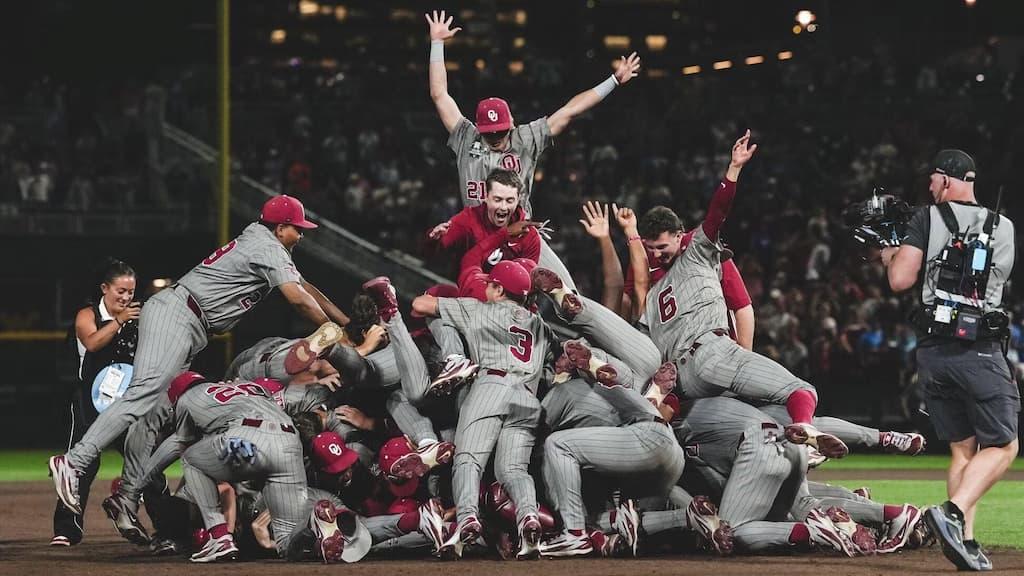
The NCAA Men's College World Series (MCWS) is one of the most unique betting events on the U.S. sports calendar. The CWS blends high-level talent with the volatility of a short tournament format.
Each June, the NCAA Division I college baseball season culminates in Omaha. There, eight talented teams battle through a double-elimination bracket. At the end of it all, a best-of-three championship series crowns a national champion.
To maximize their chances of success with betting on College World Series odds at Lucky Rebel and other top online sportsbooks, bettors must understand and account for the nuance the format creates, as well as the unique nature of roster construction and depth in college baseball relative to its MLB counterpart.
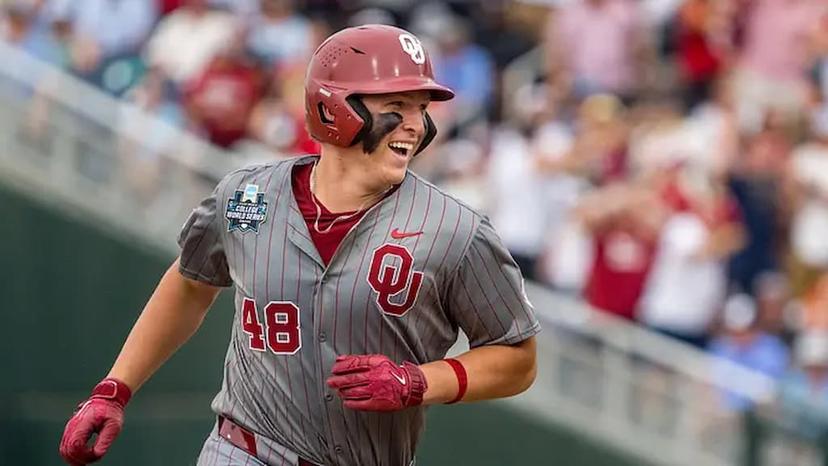
2026 College World Series Schedule and Results
| Game | Date | Time (EST) | Matchup | TV/Streaming |
| Game 1 | June 12 | 2 p.m. | No. 16 West Virginia 7, Troy 5 | ESPN |
| Game 2 | June 12 | 7 p.m. | No. 5 North Carolina 6, Ole Miss 2 | ESPN |
| Game 3 | June 13 | 2 p.m. | Oklahoma 9, No. 7 Alabama 0 | ESPN |
| Game 4 | June 13 | 7 p.m. | No. 3 Georgia 7, No. 6 Texas 1 | ESPN |
| Game 5 | June 14 | 2 p.m. | Troy 12, Ole Miss 8 (Ole Miss eliminated) | ESPN |
| Game 6 | June 14 | 7 p.m. | No. 5 North Carolina 5, No. 16 West Virginia 2 | ESPN |
| Game 7 | June 15 | 2 p.m. | No. 6 Texas 14, No. 7 Alabama 2 (Alabama eliminated) | ESPN |
| Game 8 | June 15 | 7 p.m. | Oklahoma 4, No. 3 Georgia 3 | ESPN |
| Game 9 | June 16 | 2 p.m. | No. 16 West Virginia 12, Troy 0 (Troy eliminated) | ESPN |
| Game 10 | June 16 | 7 p.m. | No. 3 Georgia 2, No. 6 Texas 0 (Texas eliminated) | ESPN |
| Game 11 | June 17 | 2 p.m. | No. 5 North Carolina 12, No. 16 West Virginia 7 (West Virginia eliminated) | ESPN |
| Game 12 | June 17 | 7 p.m. | Oklahoma 11, No. 3 Georgia 4 (Georgia eliminated) | ESPN |
| Finals Game 1 | June 20 | 7 p.m. | Oklahoma 9, No. 5 North Carolina 3 | ESPN |
| Finals Game 2 | June 21 | 2:30 p.m. | No. 5 North Carolina 6, Oklahoma 2 | ABC |
| Finals Game 3 | June 22 | 7 p.m. | Oklahoma 13, No. 5 North Carolina 2 (Oklahoma wins CWS) | ESPN |
Note: Games 13 and 14 will only be played if the previously unbeaten team in either bracket loses its first bracket final matchup (Games 11 or 12). If the undefeated team wins Games 11 or 12, it advances directly to the College World Series Finals.
Where to Bet on the College World Series in 2026
College baseball betting has expanded in recent years, especially during the postseason. Many notable sportsbooks now offer a full range of markets throughout the tournament, led by sides (moneyline and spread bets) and totals (over/under bets).
Lucky Rebel stands out for its live betting interface, which will be especially valuable given how often College World Series games turn in the late innings.
BetOnline is typically one of the first to post futures odds and opening lines, making it a useful option for bettors looking to get ahead of the market.
Everygame provides a steady menu of totals and run lines (the baseball equivalent of the point spread), which is particularly relevant in a park like Omaha where scoring conditions can shift quickly.
What Is the College World Series?
First played in 1947, the College World Series is the final stage of the NCAA Division I Baseball Championship, following Regionals and Super Regionals.
After the field is trimmed from 64 to 16 to the eight-team CWS field, the action moves to Omaha and splits into two four-team brackets. Each bracket operates under a double-elimination format. That means teams must lose twice before being eliminated. This structure regularly produces extended runs through the losers' bracket, forcing teams to play on short rest and rely heavily on their depth.
The winners of each bracket then meet in a best-of-three championship series.
From a betting perspective, this format introduces constant volatility. Pitching rotations rarely hold, bullpen usage compounds quickly, and teams facing elimination often play with a level of urgency that odds do not always fully reflect.
College World Series Betting Markets
Outright Winner
The outright market focuses on picking the eventual national champion. While straightforward in concept, it carries more variance than most futures markets due to the double-elimination format.
A single loss doesn't end a team's run, but it does create a more difficult path, often requiring additional games and deeper pitching usage.
Game Moneyline
Moneyline betting is where most day-to-day value shows up during the College World Series.
The biggest driver here is starting pitching, but unlike MLB, those matchups change quickly. A team that looks like a clear favorite behind its ace can flip to an underdog the next time out when depth arms are forced into action.
Situational context matters just as much as overall team strength, particularly when one side is managing fatigue or facing elimination.
Run Line
Run line betting in college baseball follows the standard 1.5-run spread you will typically see with MLB odds, but the results tend to be less predictable than at the professional level.
Defensive inconsistency and bullpen volatility can lead to larger scoring swings, especially in the later innings. That makes run lines more viable than many bettors expect, particularly in games where one team has a clear edge in pitching depth or rest.
Totals (Over/Under)
As with other baseball leagues and tournaments, totals are among the most popular bets in Omaha. However, College World Series over/under bets require more context than usual.
Weather plays a significant role, particularly wind direction. Games can shift from hitter-friendly to pitcher-dominated based on conditions that develop close to first pitch.
Combined with the park's naturally deep dimensions, this often creates opportunities on the under, especially when the market overreacts to season-long offensive numbers.
Props
Prop bets continue to expand in college baseball. While not as widely available as MLB markets, they can offer value due to lighter coverage and less efficient pricing.
Bettors who follow specific teams or conferences closely are often in a better position to identify mismatches or usage trends that aren't fully reflected in these lines.
Live Betting the College World Series
Live betting is one of the biggest edges available during the College World Series. This is largely because of how quickly games can turn once bullpens get involved.
Unlike MLB, where relievers are more predictable, college bullpens often feature a steep drop-off after the top one or two arms. Once those pitchers exit, command issues and inexperience can create sudden scoring swings that the market is slow to fully adjust to.
The most important thing to watch live is pitching changes. When a starter comes out, the name and track record of the reliever matter far more than the current score. A team holding a small lead with a shaky bullpen arm on the mound is often far more vulnerable than the live odds suggest.
Game flow also plays a role. Teams that have already burned through multiple relievers in the previous game or earlier in the same game are far more likely to give up late runs. This is especially true in elimination scenarios, which can force coaches to get creative with their choices.
Weather remains a factor live as well. If the wind shifts during the game, totals and run-scoring expectations can change quickly, sometimes before sportsbooks fully react.
For bettors who are actively watching games, these moments consistently offer better entry points than pregame lines.
College World Series Betting Strategy
Understanding the Omaha Environment
In Omaha, everything starts with the ballpark.
Charles Schwab Field changes how games are played. Power numbers that hold up across the regular season don't always translate, and teams built around home runs can struggle to generate consistent offense. Fly balls that would leave smaller parks often turn into routine outs here, particularly when the wind is working against hitters.
This shifts the advantage toward teams that can create runs without relying on power and emphasize contact, baserunning, and defensive execution.
Fading Power-Heavy Offenses
One of the most consistent betting angles in Omaha is identifying teams whose offensive profiles are likely to regress.
Programs that lean heavily on home runs can look dominant in conference play but lose that edge in a larger park. When those fly balls stay in play, the entire offensive approach becomes less effective, and scoring opportunities shrink.
Teams that work counts, hit line drives, and use the full field tend to be more reliable in this setting, even if they generate less attention during the regular season.
Bullpen Depth Over Starting Pitching
Pitching depth often plays a decisive role in games in the College World Series. While MLB teams employ five-man (or even six-man) rotations, college baseball staffs are built largely to navigate three-game stretches.
The structure of the tournament forces teams to cycle through multiple arms in a short period of time and puts roster construction and quality depth to the test. By the middle of the bracket, the burden can shift to third and fourth starters, middle relievers, and setup arms.
Teams with trustworthy third and fourth starters and/or those with deeper, more reliable bullpens are better equipped to handle this workload, especially in close games where late innings determine the outcome.
Tracking Fatigue and Recent Usage
Fatigue is one of the most important factors in the College World Series.
Because games take place in quick succession, bullpen usage accumulates rapidly. A team that appears evenly matched on paper can be at a significant disadvantage if it has burned through its top relievers in the previous game or two.
This often shows up late, with increased walks, loss of command, and scoring swings in the final innings. It is also one of the clearest paths to finding live betting value.
Navigating Elimination Games
Elimination games introduce a different level of urgency. That urgency changes how teams approach the game.
Coaches are more aggressive with pitching decisions, often turning to top relievers earlier than they otherwise would. Lineups are managed with fewer long-term considerations, and the overall pace of the game tends to feel more compressed.
College World Series odds do not always reflect these factors. That can create value on teams facing elimination, particularly in even or almost even matchups.
Conference Strength vs. Market Value
The SEC remains the strongest conference in college baseball, but that reputation also inflates betting lines.
Public perception tends to push SEC teams into shorter prices, especially in futures markets. While that dominance is real, it doesn't always translate to betting value.
Contenders from other conferences often present more balanced pricing. Many of these teams also profile as stylistically well-suited to Omaha. In a format where environment and depth matter as much as raw talent, those teams can be just as dangerous.
Using Conference Tournaments as Indicators
Conference tournaments in late May can be misleading if you take the results at face value.
Top programs often prioritize rest over results, limiting the usage of key pitchers in order to stay fresh for the NCAA Tournament. As a result, an early exit doesn't necessarily signal poor form—it can reflect a strategic decision.
On the other side, teams that make deep conference tournament runs may enter the regionals with a taxed pitching staff. That imbalance can carry forward into Omaha, where depth becomes even more important.

College World Series Betting Resources
There aren't as many betting resources for niche betting markets like college baseball as there are for mainstream markets like college basketball and college football.
However, there are some great resources for college baseball bettors to use for betting on the regular season, NCAA tournament, and College World Series.
- D1Baseball – Arguably the top all-around resource for college baseball news, rankings, stats, and tournament projections. D1Baseball is especially useful during the NCAA Tournament and College World Series when tracking rotations, injuries, and regional projections.
- Warren Nolan – A valuable stats-driven resource featuring RPI rankings, strength of schedule metrics, live scores, standings, and team projections. Warren Nolan is particularly helpful for bettors comparing resumes and evaluating how teams may match up.
- Baseball America – Known for prospect coverage and recruiting analysis, Baseball America also provides strong college baseball coverage throughout the season. It is a good resource for identifying MLB-caliber talent, lineup depth, and teams with strong pitching development.
- 64Analytics – An advanced analytics platform focused specifically on college baseball. The site offers in-depth metrics, matchup data, predictive rankings, and statistical breakdowns that can help bettors go beyond basic win-loss records and traditional stats.
D1Baseball, Baseball America, and 64Analytics all have premium subscription options that enhance their usefulness. Those subscriptions can have value even if you only bet on college baseball during the postseason and College World Series, but they can be especially beneficial if you bet regularly on college baseball all season long.
College World Series History
College World Series history reinforces just how unpredictable this event can be. To date, there have been only six repeat champions, and in the 2000s, 17 different schools have won a title.
SEC success has been a key part of recent CWS history. Entering the 2026 edition, SEC teams have won the last six titles. Also, the CWS championship series has featured at least one SEC team eight straight times and 17 of the last 18. And of the conference's current members, Alabama (whose most recent appearance was in 1999) and Missouri (whose last appearance was in 1964) are the only two to not make at least one Omaha trip in the 21st century.
Recent College World Series Winners (2000-Present)
| Year | Champion | Runner-Up |
| 2026 | Oklahoma | North Carolina |
| 2025 | LSU | Coastal Carolina |
| 2024 | Tennessee | Texas A&M |
| 2023 | LSU | Florida |
| 2022 | Ole Miss | Oklahoma |
| 2021 | Mississippi State | Vanderbilt |
| 2020 | No tournament | N/A |
| 2019 | Vanderbilt | Michigan |
| 2018 | Oregon State | Arkansas |
| 2017 | Florida | LSU |
| 2016 | Coastal Carolina | Arizona |
| 2015 | Virginia | Vanderbilt |
| 2014 | Vanderbilt | Virginia |
| 2013 | UCLA | Mississippi State |
| 2012 | Arizona | South Carolina |
| 2011 | South Carolina | Florida |
| 2010 | South Carolina | UCLA |
| 2009 | LSU | Texas |
| 2008 | Fresno State | Georgia |
| 2007 | Oregon State | North Carolina |
| 2006 | Oregon State | North Carolina |
| 2005 | Texas | Florida |
| 2004 | Cal State Fullerton | Texas |
| 2003 | Rice | Stanford |
| 2002 | Texas | South Carolina |
| 2001 | Miami (FL) | Stanford |
| 2000 | LSU | Stanford |
Even with various programs experiencing sustained success across several years, repeat runs are difficult, and underdogs have regularly upset the odds.
Iconic College World Series Players and Moments
Defining Moments in College World Series History
One of the most dominant stretches in the sport came from USC, which won five consecutive national titles from 1970 through 1974. That run remains unmatched and set the standard for what a true college baseball dynasty looks like.
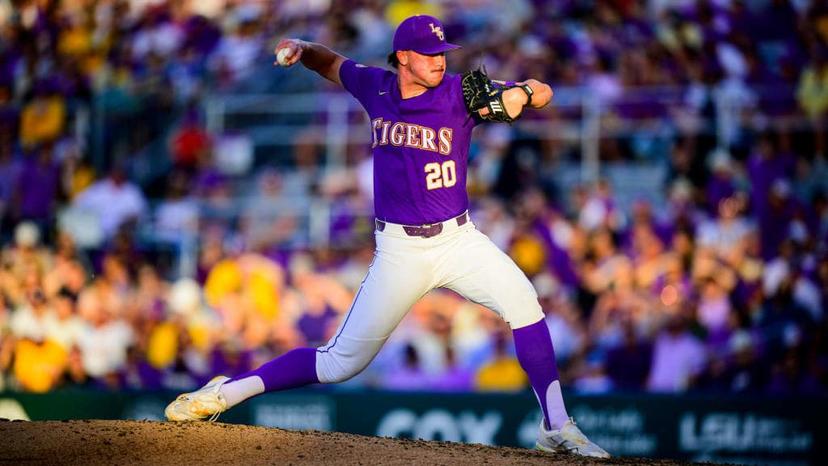
LSU has been in the championship conversation for much of the last four decades and has been at the center of numerous memorable finishes. In 1996, the Tigers dramatically defeated Miami for the title with a walk-off home run by Warren Morris. Four years later, the program delivered another walk-off title, rallying from three runs down in the final two innings to stun Stanford. Those two moments helped establish LSU as one of the defining programs of the modern era.
Underdog runs have also shaped the tournament's identity. Fresno State entered the 2008 tournament as a No. 4 regional seed and went on to win the national title, one of the most unlikely championship runs in NCAA history.
Coastal Carolina captured the 2016 title with a deep, disciplined roster that thrived under pressure. The Chanticleers' championship run reinforced how dangerous well-rounded teams can be in Omaha.
Another memorable championship occurred in 2021, when Mississippi State finally broke through to win the school's first national title in a team sport. That title carried added weight, both because of MSU's stature in the sport and because it came in the first full tournament following the cancellation of the 2020 season.
Iconic College World Series Players
The College World Series has also served as a national stage for players who went on to become stars at the professional level.
Dave Winfield (Minnesota) remains one of the most famous examples, having dominated in Omaha before becoming a Hall of Fame talent. Bob Horner (Arizona State) similarly used the tournament as a launching point, showcasing elite power that translated to the next level.
Todd Walker (LSU) was one of the defining hitters of his era, playing a central role in the program's rise during the 1990s. Two-way star Mark Kotsay starred during his time at Cal State Fullerton, demonstrating the kind of all-around skill set that plays well in Omaha.
On the pitching side, Jason Windsor delivered one of the most dominant College World Series performances in 2004, leading Cal State Fullerton to a national title with elite command under pressure.
More recently, Paul Skenes helped lead LSU to a title in 2023, earning Most Outstanding Player honors before being drafted first overall by the Pittsburgh Pirates in that year's MLB Draft.
In addition to Winfield, other future MLB superstars who have played in the College World Series include Roger Clemens and Barry Bonds. Also, World Series-winning manager Terry Francona took home Most Outstanding Player honors in 1980 to go with the title he won with Arizona that year.
Conclusion
The College World Series rewards a different kind of betting approach.
Success in Omaha comes from understanding how environment, fatigue, and depth reshape the game. Teams that look dominant on paper don't always hold that edge once they arrive, and that disconnect is where value emerges.
If you focus on how teams are built and not just what they have done on the road to Omaha, you will be in a much stronger position to navigate the volatility of this tournament and find opportunities the market doesn't fully account for.
