US Senate Passes SR 708 Prediction Market Ban

Written by: Jonathan Rodriguez
Published: Sat May 02, 2026, 7:00 am ET
Read Time: 4 minutes
industry
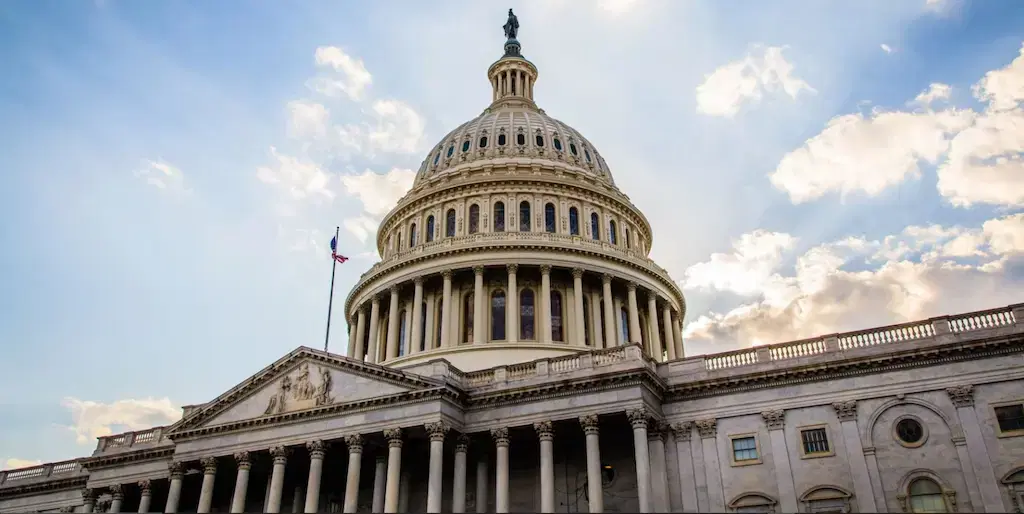
The U.S. Senate unanimously approved SR 708 on April 30 through a voice vote. The bipartisan resolution immediately banned senators, Senate officers, and staff from participating in prediction markets.
The measure specifically targets platforms like Kalshi and Polymarket. Lawmakers argued those platforms create ethical risks for public officials with access to sensitive information.
The resolution arrives during growing scrutiny of prediction markets across the broader US gambling industry. It also highlights ongoing debates surrounding regulation and oversight in markets connected to politics, economics, and global conflicts.
Industry observers noted the move could influence future conversations involving US online sportsbooks and event-based wagering products.
SR 708 Immediately Changes Senate Rules on Prediction Markets
Sen. Bernie Moreno introduced SR 708 after several recent insider trading controversies involving prediction markets.
Sen. Alex Padilla later expanded the proposal to include Senate staff members and officers.
The resolution amends Senate standing rules to forbid any transaction dependent on the "occurrence, nonoccurrence, or the extent of the occurrence of a specific event."
That language broadly covers prediction market contracts involving politics, wars, economic events, and other public outcomes.
The Senate approved the measure unanimously through a voice vote. The new rule took effect immediately after passage.
Senate Democratic Leader Chuck Schumer strongly backed the resolution during floor discussions.
Schumer delivered the debate's defining soundbite when he warned, "We must never allow Congress to turn into a casino."
His remarks reflected growing bipartisan concern over gambling optics inside Congress.
Moreno also argued lawmakers should never profit from speculative trading while receiving taxpayer-funded salaries.
He stressed that rebuilding public trust remains essential for Congress.
Insider Trading Concerns Accelerated the Resolution
Lawmakers moved quickly because of several recent scandals involving alleged insider information and prediction markets.
One major controversy involved a U.S. Army Special Forces soldier accused of profiting from classified information.
Federal prosecutors alleged the soldier used confidential intelligence tied to the capture of Venezuelan President Nicolás Maduro. Authorities claimed the individual earned roughly $400,000 through prediction market trades.
Meanwhile, lawmakers also raised concerns about suspicious trading activity surrounding military operations in Iran.
Additionally, Kalshi reportedly suspended three political candidates for trading on outcomes connected to their own election campaigns.
Moreno repeatedly emphasized the damage insider trading allegations cause to public confidence. According to Moreno, Americans deserve assurance that elected officials are not monetizing privileged government information.
Legislative Context and Comparisons
The Senate's action could pressure other branches of government to adopt similar restrictions.
Rep. Dina Titus and Rep. Ashley Hinson have already discussed related proposals for the House of Representatives.
The Senate resolution also revived comparisons to the 2012 STOCK Act. That law attempted to prevent congressional insider trading involving stocks and securities. However, critics argue enforcement has remained inconsistent for years.
Analysts noted prediction markets presented an easier political target because lawmakers rarely depend on them financially.
As a result, senators could support a blanket prohibition without significantly affecting personal investment activity.
Some lawmakers also want broader national restrictions on event contracts. Sen. Chris Murphy has supported tighter rules on contracts tied to wars, assassinations, and geopolitical violence.
Those proposals would apply beyond government officials and could impact the broader US gambling sector.
To clarify the debate, the two models operate differently:
- Prediction markets: They let traders buy and sell "contracts" tied to event outcomes, such as whether the Federal Reserve will raise interest rates. Prices reflect collective probability.
- Sports betting: Bettors place wagers against a bookmaker or oddsmaker on fixed sporting outcomes, such as which team will win a game.
Industry Reaction
Prediction market operators largely welcomed the Senate's decision. Kalshi and Polymarket reportedly thanked lawmakers for approving the restriction.
Industry executives viewed the measure as necessary protection against insider trading accusations.
Meanwhile, companies feared continued scandals could trigger aggressive federal intervention from the Commodity Futures Trading Commission. Executives also worried negative headlines could damage public trust and threaten the long-term future of regulated prediction markets.
Additionally, several operators stressed they already prohibit insider trading and market manipulation on their platforms. Industry representatives argued ethical safeguards improve transparency and legitimacy for prediction markets.
At the same time, operators continue pushing regulators to clarify how federal agencies classify event contracts.
That debate remains important because prediction markets increasingly overlap with areas connected to US online sportsbooks and financial trading platforms.
What Happens Next?
SR 708 currently applies only to the Senate. However, lawmakers encouraged the House, executive branch, and judicial branch to adopt similar restrictions.
The resolution could also strengthen momentum for broader federal regulation involving prediction markets.
Regulators and lawmakers continue debating whether those products resemble financial exchanges, gambling offerings, or hybrid investment tools.
Future legislation may determine how prediction markets operate alongside traditional US gambling products and regulated US online sportsbooks.
Betting Industry News Betting Industry News Betting Industry News Betting Industry NewsMore Industry News

Games Global Gains West Virginia iGaming License
Wyoming Lawmakers Advance Sweepstakes Casino Ban Proposal
NBA and WNBA Launch Responsible Gambling Campaign
NY Proposes AI Restrictions & At-Risk Sportsbook Rules

Jonathan Rodriguez
Jonathan is an avid basketball fan, and is often looking forward to the next upcoming NBA season when not checking players' stats during games. He also likes to keep his ears on the ground for the latest rumblings in the online casino industry.
This site contains commercial content. We may be compensated for the links provided on this page. The content on this page is for informational purposes only. Betting News makes no representation or warranty as to the accuracy of the information given or the outcome of any game or event.