Illinois SB 3019 Creates First Prediction Market Tax

Written by: Jonathan Rodriguez
Published: Fri Jun 19, 2026, 11:00 am ET
Read Time: 4 minutes
industry
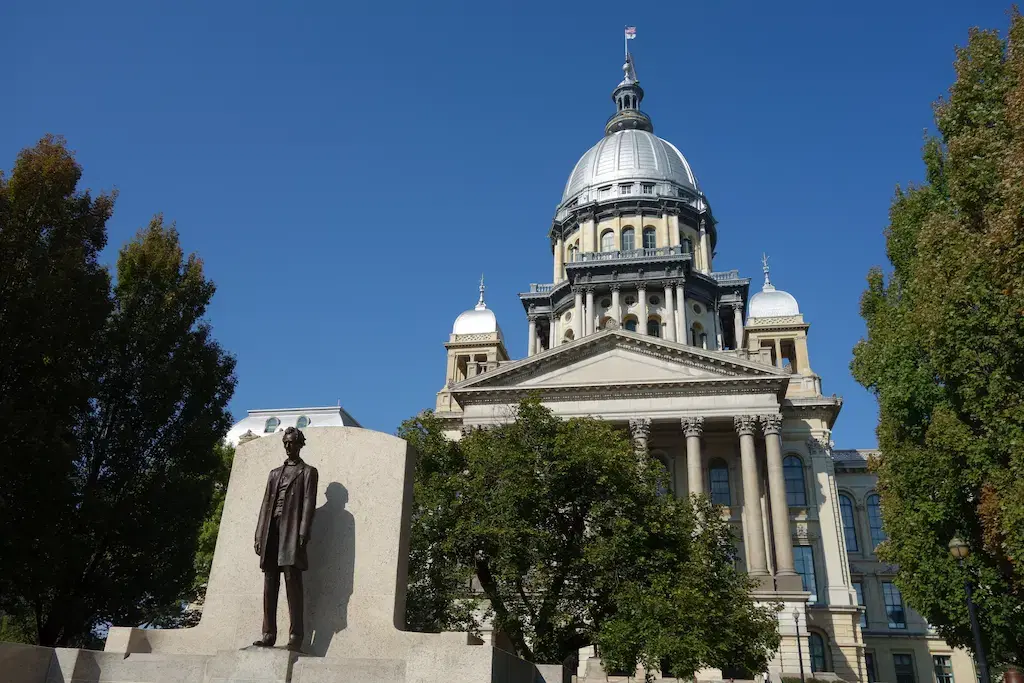
Illinois Governor JB Pritzker has signed SB 3019 into law, embedding prediction markets into the state's sports wagering framework. More notably, it expands taxation across emerging digital trading products.
The legislation marks a significant shift in Illinois gambling regulation as the state redefines "exchange wagers" under its Sports Wagering Act.
The budget package also reflects Illinois' broader effort to modernize revenue policy across digital sectors, including crypto and online advertising.
However, the most consequential change comes from how the law restructures prediction markets rather than simply taxing them.
SB 3019 Rewrites Prediction Market Rules Through Exchange Wager Tax
SB 3019 introduces a transaction-based tax on "exchange wagers," which the law defines as prediction market-style contracts tied to real-world outcomes. Importantly, the tax applies to individual trades or wagers, not contract ownership or pricing outcomes.
Under the framework, licensed operators pay a 1.75% tax on the gross dollar value of all qualifying transactions. This rate increases to 3.5% once a licensee processes more than 5 million individual trades in a fiscal year. The threshold measures activity volume, not monetary value per trade.
This structure matters because prediction markets typically involve high-frequency, low-dollar transactions. Therefore, the tax scales with trading activity rather than profitability, creating a fundamentally different burden compared to traditional gambling taxes.
In addition, SB 3019 directs revenue from this tax into Illinois' sports wagering fund. However, the law goes further than taxation alone by redefining which entities may legally operate these markets in the state.
Law Limits Market Access to Licensed Sportsbooks
A key but underreported element of SB 3019 is its amendment to the Sports Wagering Act. The law classifies "exchange wagers" as a form of sports betting activity. As a result, only licensed Illinois sports betting operators may legally offer these products.
This creates a structural bottleneck for the prediction market industry. Major platforms such as Kalshi and Polymarket do not currently hold Illinois sports betting licenses.
Consequently, SB 3019 effectively channels market participation toward regulated sportsbook operators rather than standalone prediction platforms.
This approach places US online sportsbooks like DraftKings and FanDuel in a potentially advantageous position if they choose to launch exchange-style products under state licensing rules. Meanwhile, it leaves unresolved tension with federal oversight, particularly ongoing jurisdictional questions involving the Commodity Futures Trading Commission.
Rhetoric vs. Regulatory Reality
While the specific mechanics of the "exchange wager" tax target highly specialized digital assets, Governor Pritzker framed the broader, underlying $56 billion budget bill as a populist stabilizing package designed to shield consumers:
"I'm proud to sign Illinois' eighth consecutive balanced budget – one that lowers costs for everyday Illinoisans, protects our state's fiscal health, and continues our economic progress," said Governor Pritzker. "Working families need relief, and this budget delivers by investing in housing, food access, education, our healthcare system, and other necessities that make life more affordable."
However, when applied to the specialized world of event trading, this consumer-centric narrative hits a notable snag. By pulling prediction markets under the restrictive licensing rules of the Sports Wagering Act, SB 3019 acts less like a broad consumer protection shield and more like an aggressive corporate gatekeeper.
By prioritizing state revenue generation and favoring entrenched sports betting giants, the state's actual regulatory strategy directly clashes with the administration's public positioning of affordability and widespread market relief.
Instead of protecting everyday participants, the law effectively limits their choices to a handful of state-sanctioned sportsbooks.
Other States Likely to Reassess Prediction Market Regulation
Illinois' move may prompt other states with established gambling industries to reconsider how they classify prediction markets.
Regulators in states with mature US online sportsbooks sectors could explore similar licensing-driven frameworks. This can be the direction if local regulators view exchange wagering as an extension of sports betting.
However, adoption is not guaranteed. Federal jurisdiction remains unresolved, and courts continue to examine whether prediction markets fall under securities, commodities, or gambling regulation.
Therefore, other states may wait for clearer federal guidance before replicating Illinois' model.
Ultimately, SB 3019 does more than introduce a tax. It reshapes access, redefines legality, and positions Illinois as an early test case for integrating prediction markets into the regulated Illinois gambling ecosystem.
Betting Industry News Betting Industry News Betting Industry News Betting Industry NewsMore Industry News
Protect College Sports Act Advances in Senate

Ninth Circuit Reverses Kalshi Tribal Injunction Ruling

New York Sports Betting Handle Falls 15% in August
H.R.10357 Advances Gambling Loss Tax Deduction Fix

Jonathan Rodriguez
Jonathan is an avid basketball fan, and is often looking forward to the next upcoming NBA season when not checking players' stats during games. He also likes to keep his ears on the ground for the latest rumblings in the online casino industry.
This site contains commercial content. We may be compensated for the links provided on this page. The content on this page is for informational purposes only. Betting News makes no representation or warranty as to the accuracy of the information given or the outcome of any game or event.