States Ask SCOTUS to Decide Kalshi Sports Betting Case

Written by: Jonathan Rodriguez
Published: Thu Oct 08, 2026, 8:00 am ET
Read Time: 4 minutes
industry
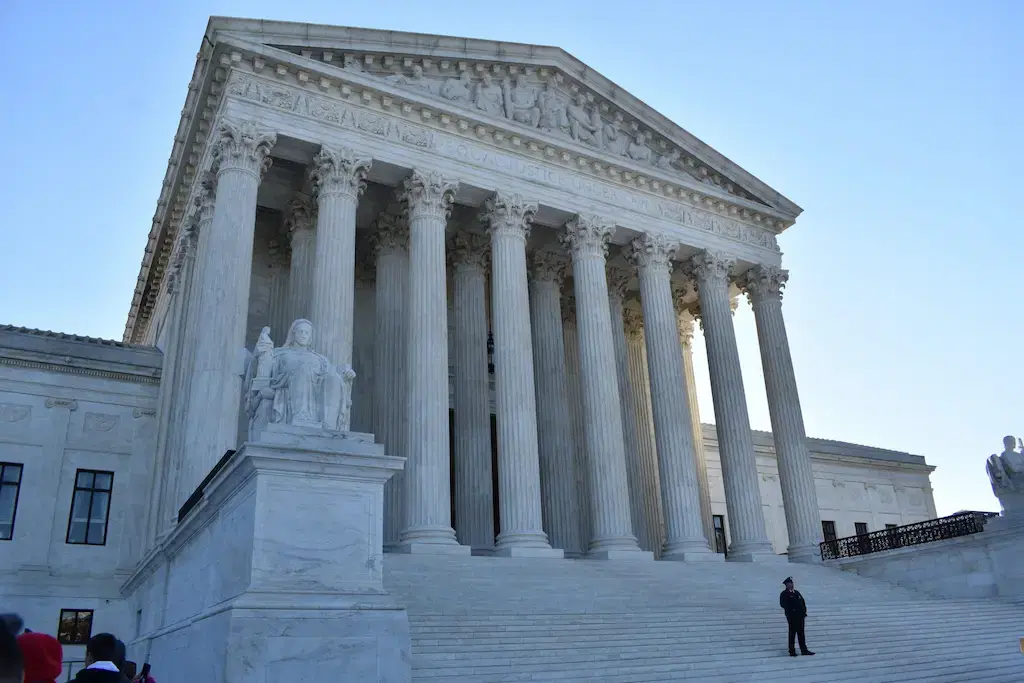
Pressure is mounting on the U.S. Supreme Court (SCOTUS) to review the legal fight surrounding Kalshi's sports contracts.
New Jersey's petition has gained support from 39 state attorneys general and the District of Columbia. Gaming regulators have also urged the justices to take the case.
The filings seek clarity over whether Kalshi can offer sports-event contracts without complying with state gambling laws. That question has created a growing conflict between federal derivatives regulation and state gambling authority.
New Jersey Seeks SCOTUS Review
New Jersey asked the Supreme Court to review a Third Circuit decision favoring Kalshi. The state filed its petition in September after losing at the appellate level.
Kalshi argues that its sports contracts qualify as federally regulated financial products. The company relies on the Commodity Exchange Act and the CFTC's regulatory authority.
However, New Jersey takes a different position. It argues that Kalshi's contracts function as sports wagers and should remain subject to state regulation.
The dispute therefore reaches beyond New Jersey gambling rules. It could determine how federal commodities law interacts with state sports-betting frameworks across USA gambling.
The Supreme Court has not agreed to hear the case yet. Kalshi now has until November 9 to respond to New Jersey's petition.
Gaming Regulators Back Supreme Court Review
The pressure increased further after the International Association of Gaming Regulators (IAGR) and North American Gaming Regulators Association (NAGRA) filed an amicus brief.
The groups argue that sports wagers should not escape state oversight simply because operators call them event contracts.
The regulators highlighted the conflicting appellate decisions in their filing.
"The same product, offered by the same company under the same federal registration, is presently shielded from state regulatory authority within the Third Circuit and subject to it within the Sixth and Ninth," the brief states.
The Third Circuit has favored Kalshi's federal regulatory position. Meanwhile, the Sixth and Ninth Circuits have supported state authority in related cases.
That split has created different rules for similar prediction-market products across the country.
IAGR President Ben Haden also warned about the potential consumer consequences.
"IAGR is concerned that sports wagering offered through prediction markets leaves consumers without the protection gaming regulators provide pursuant to public policy established in their jurisdiction," Haden said.
"Our brief challenges the claim that offering a sports wager as an event contract exempts it from state gambling laws."
39 States Add Pressure
A coalition of 39 state attorneys general and Washington, D.C., has now backed New Jersey's request.
The states argue that prediction markets cannot avoid gambling regulations through the structure of their contracts. They also point to their experience regulating sports wagering.
State officials oversee age restrictions, self-exclusion programs and consumer protections. They also monitor sports integrity and enforce rules against unlicensed operators.
The coalition says the dispute has already created substantial legal uncertainty.
"Waiting too long to address this issue will permit the federal-state regulatory dispute to escalate," the states said in their brief.
They want the Supreme Court to resolve the circuit split and clarify the CFTC's authority.
That issue could have major implications for US online sportsbooks and prediction market operators. A broad federal ruling could reshape how states regulate competing sports-event products.
Regulators Highlight Consumer and Integrity Risks
Gaming regulators argue that state oversight provides safeguards that federal commodities regulation may not replicate.
Those safeguards include age verification, self-exclusion and monitoring of potentially harmful gambling activity. Regulators also rely on access to operator records and betting information.
Haden said the absence of those protections could create additional risks.
"Without the protection and oversight provided by gaming regulators, we are highlighting the risks of underage players being able to access gambling freely, problem gamblers being left without proven harm-prevention tools – or worse, being targeted by operators – and the integrity of sport being put at risk."
The regulators also argue that sports-integrity monitoring depends on visibility across the betting market. Activity outside state systems could make suspicious patterns harder to identify.
Circuit Split Increases Pressure on SCOTUS
The conflicting appellate rulings give the Supreme Court a stronger reason to consider the dispute.
The Third Circuit found that Kalshi's contracts likely qualify as swaps. It also found that federal law likely preempts New Jersey's sports-wagering laws.
The Ninth Circuit later ruled that Nevada could apply its gambling laws to sports-event contracts. The Sixth Circuit also allowed Ohio and Tennessee to enforce their gambling laws.
Consequently, prediction-market operators now face different legal standards across jurisdictions.
Other cases are also pending in federal appeals courts. Those cases could produce additional rulings before the Supreme Court decides whether to intervene.
For now, the justices have not granted New Jersey's petition. However, the growing coalition puts additional pressure on the Court to settle the dispute.
A Supreme Court ruling could ultimately define whether sports prediction markets fall primarily under federal commodities regulation or state gambling laws.
That decision could shape the future of prediction markets, state gambling enforcement and the broader USA gambling industry.
Betting Industry News Betting Industry News Betting Industry News Betting Industry NewsMore Industry News

Quebec Election Opens Door to iGaming Market Reform
Maine Regulators Monitor AI Use at Sportsbooks
PA Self-Exclusions Up 18% as Gambling Revenue Hits $7B
Nebraska Online Sportsbooks Push Gains Momentum

Jonathan Rodriguez
Jonathan is an avid basketball fan, and is often looking forward to the next upcoming NBA season when not checking players' stats during games. He also likes to keep his ears on the ground for the latest rumblings in the online casino industry.
This site contains commercial content. We may be compensated for the links provided on this page. The content on this page is for informational purposes only. Betting News makes no representation or warranty as to the accuracy of the information given or the outcome of any game or event.