Senate Bill S.4160 Targets Prediction Markets as Gambling

Written by: Jonathan Rodriguez
Published: Fri Apr 24, 2026, 8:00 am ET
Read Time: 3 minutes
industry
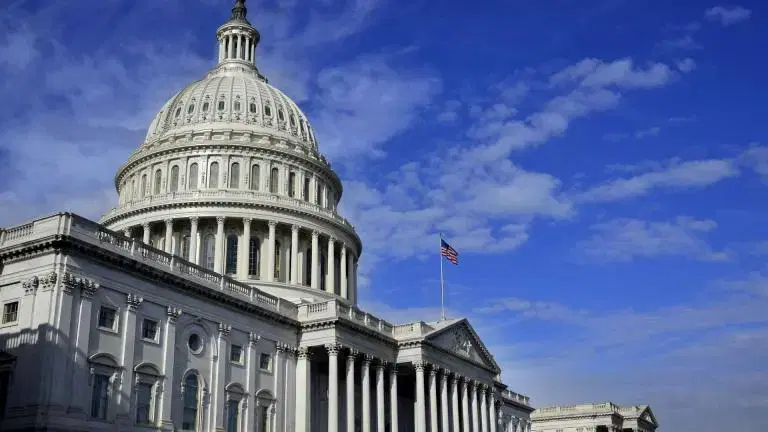
U.S. lawmakers are advancing Bill S.4160, a federal bill that would redefine prediction markets as gambling. The legislation is formally known as the Prediction Markets are Gambling Act. It is a bi-partisan bill introduced a month ago with Sen. Adam Schiff (D-CA) as the lead sponsor. Meanwhile, Sen. John Curtis (R-UT) and Sen. Catherine Cortez Masto (D-NV) co-sponsor Bill S.4160.
The proposal targets event-based contracts tied to sports, politics, and real-world outcomes. It arrives amid ongoing court disputes and regulatory uncertainty in USA gambling policy.
Meanwhile, industry pressure continues to grow over how these markets should be classified.
Why Lawmakers Are Defining Bill S.4160
Lawmakers argue prediction markets exploit a regulatory gray area. The bill seeks to close this gap under federal commodities law. While Kalshi operates as a CFTC-regulated exchange, Polymarket remains under a 2022 consent order that limits its US activity.
Kalshi and Polymarket Critics say these platforms resemble US online sportsbooks in practice. They allow users to speculate on elections, sports, and major events. Therefore, senators argue they effectively function as unlicensed gambling markets.
A key issue involves the "public interest" standard under current law. The CFTC can block contracts deemed contrary to the public interest.
The bill seeks to codify that sports and election betting meets that standard. As a result, it would limit the CFTC's discretion over approval decisions. This shift would significantly tighten federal control over prediction markets.
Conflict with Courts and Regulatory Pushback
The bill also responds to recent court setbacks for regulators. In 2024 and 2025, courts ruled against the CFTC in key cases. Those rulings allowed election-based markets on platforms like Kalshi.
Consequently, lawmakers view S.4160 as a legislative correction. It attempts to override judicial decisions limiting federal authority. In effect, the Senate is reasserting control through statutory change. State regulators also continue to challenge prediction market activity.
States such as New York, Nevada, Washington, and Arizona have taken action. They argue these platforms operate without proper gambling licensing.
Economic Debate: Speculation vs Hedging
A central issue in the debate is how prediction markets function economically. One side views them as speculative gambling products. This resembles wagering on sports outcomes for profit.
However, industry participants argue they can also serve as hedging tools. Businesses may use contracts to offset political or economic risk exposure.
For example, a firm might hedge against election-driven tax changes. This creates tension between speculation and legitimate financial risk management. Critics say the bill does not clearly separate these two functions. Lobbyists argue this ambiguity could restrict useful financial tools.
Key Provisions of the Prediction Markets as Gambling Bill
Bill S.4160 redefines event contracts under the Commodity Exchange Act. It classifies sports and election outcomes as gambling activity. It also restricts federally regulated platforms from offering these contracts.
Additionally, it strengthens state authority over gambling enforcement. Importantly, it embeds a stricter "public interest" standard in law. This limits regulatory flexibility for approving controversial contracts.
Potential Impact on U.S. Gambling and Online Betting Markets
Bill S.4160 could significantly reshape the US online sportsbooks ecosystem. It may reduce competition from financial-style prediction platforms. Traditional sportsbooks could benefit from clearer regulatory boundaries.
However, innovation in event-based trading may face new restrictions. Platforms like Kalshi and Polymarket may need to restructure operations. Polymarket's consent order status makes the stakes particularly high.
The bill could further limit its path to full U.S. market re-entry. Overall, S.4160 signals a stricter federal approach to USA gambling classification. It highlights escalating tension between courts, regulators, and lawmakers.
Betting Industry News Betting Industry News Betting Industry News Betting Industry NewsMore Industry News
Iowa Judge Rejects Kalshi Bid to Block Gambling Law

New Mexico Tribes Push to Block Kalshi Sports Betting

Games Global Enters Alberta iGaming Market

Kalshi Loses Tenth Circuit Bid in Utah Gambling Case

Jonathan Rodriguez
Jonathan is an avid basketball fan, and is often looking forward to the next upcoming NBA season when not checking players' stats during games. He also likes to keep his ears on the ground for the latest rumblings in the online casino industry.
This site contains commercial content. We may be compensated for the links provided on this page. The content on this page is for informational purposes only. Betting News makes no representation or warranty as to the accuracy of the information given or the outcome of any game or event.