US Senators Push Ban on Sports Prediction Markets

Written by: Jonathan Rodriguez
Published: Tue Mar 24, 2026, 8:00 am ET
Read Time: 4 minutes
industry
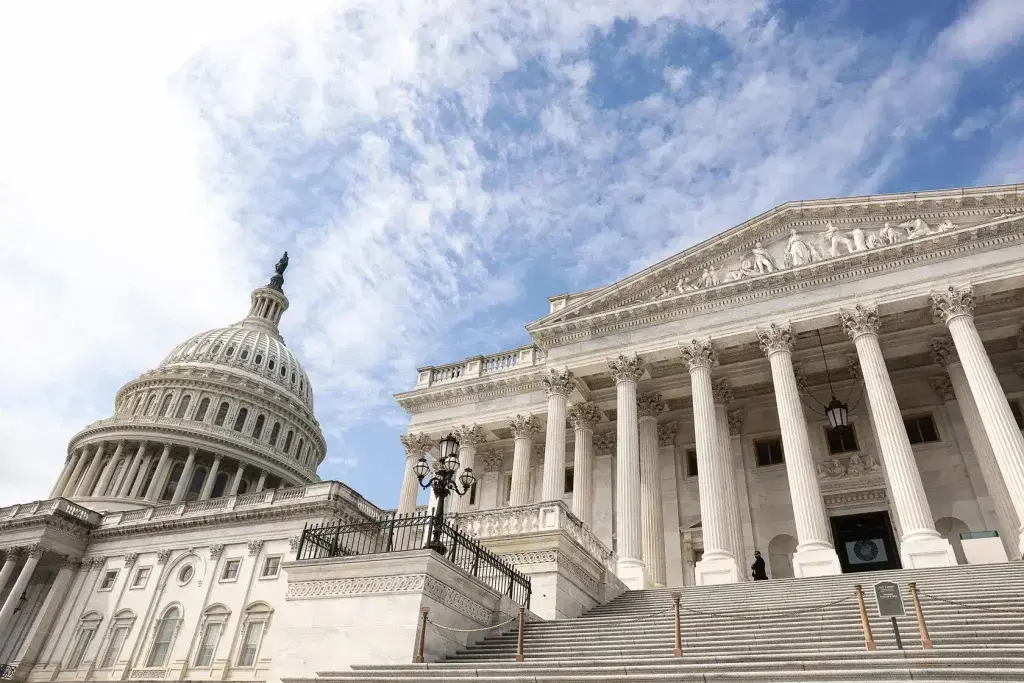
A bipartisan group of U.S. senators has introduced a new federal bill targeting prediction market platforms that offer sports-related contracts. The proposal marks a significant escalation in the ongoing debate over how these platforms should be regulated.
Moreover, it reflects growing concern that prediction markets are operating too similarly to traditional betting without following the same rules. As a result, the measure could reshape the balance between federal oversight and state-controlled USA gambling frameworks.
US Senators Push Federal Ban on Sports Prediction Markets
Lawmakers from both parties are now moving to close what they describe as a regulatory loophole. Notably, Senators Adam Schiff (D-CA) and John Curtis (R-UT) are leading the initiative.
Their involvement highlights a rare alignment between states with very different gambling policies. California maintains strict regulatory oversight, while Utah enforces a near-total gambling ban.
Importantly, the timing of the bill appears closely tied to a recent partnership between Major League Baseball (MLB) and Polymarket. Many analysts believe this deal served as the "last straw" for lawmakers.
The agreement signaled growing mainstream acceptance of prediction markets within professional sports. Consequently, federal lawmakers moved quickly to address what they see as an expanding regulatory gap.
The legislation seeks to prevent federally regulated prediction markets from offering contracts tied to sporting events. These platforms currently fall under the oversight of the Commodity Futures Trading Commission (CFTC), rather than state gaming regulators.
Several senators backing the bill argue that prediction markets resemble US online sportsbooks in function. However, they do not comply with the same licensing, taxation, and consumer protection requirements.
Therefore, lawmakers believe federal action is necessary to preserve the integrity of existing USA gambling systems.
The push comes amid mounting pressure from state regulators and tribal gaming groups. Many of these stakeholders claim prediction markets threaten their revenue streams. Consequently, federal lawmakers are stepping in to reinforce state authority over sports betting.
What the Proposed Measure Includes
The bill outlines several key provisions aimed at restricting prediction market activity:
- Direct Sports Ban: Prohibits event contracts based on professional, collegiate, or amateur athletic outcomes
- Casino "Re-labeling" Guardrails: Prevents platforms from offering games like blackjack or slots under the guise of "financial derivatives"
- State Sovereignty: Explicitly returns the authority to regulate all sports-related wagering to individual state and tribal governments
- Scope Limitation: Confines prediction markets strictly to non-gambling economic and political indicators
These measures aim to clearly separate financial trading products from gambling activities while closing both current and future regulatory loopholes.
Mixed Reactions From Industry Stakeholders
Supporters of the bill include many operators within US online sportsbooks. They argue the legislation levels the playing field. Furthermore, they believe it protects regulated markets from unfair competition.
On the other hand, prediction market platforms strongly oppose the measure. They argue it stifles innovation and restricts legitimate financial instruments. Critics also warn that banning these contracts could push users toward offshore platforms. As a result, consumer protections may weaken rather than improve.
States Intensify Their Own Regulatory Efforts
Meanwhile, several states have already taken action against prediction markets. Nevada regulators have moved aggressively to block such platforms from operating locally. Similarly, Arizona has pursued enforcement actions to limit their reach.
These efforts highlight a broader trend among states seeking to defend their regulated betting ecosystems. In many cases, officials argue prediction markets bypass state laws while offering similar products. Therefore, the federal bill aligns with ongoing state-level initiatives.
Potential Impact on the Future of USA Gambling
If passed, the bill could significantly alter the trajectory of USA gambling. It would likely strengthen the position of regulated US online sportsbooks. At the same time, it could restrict the expansion of prediction market platforms in the sports sector.
However, the long-term effects remain uncertain. Some analysts believe the legislation could drive innovation elsewhere. Others argue it will solidify state control over sports betting for years to come.
Ultimately, the proposal signals a critical moment for the industry. Lawmakers are drawing a firm line between financial markets and gambling. The outcome could define how both sectors evolve in the United States.
Betting Industry News Betting Industry News Betting Industry News Betting Industry NewsMore Industry News
MD Sports Betting: Sept Handle $652M, Revenue Down 20%

New Brunswick Eyeing Private iGaming Market
Sen. Ted Cruz Bill Targets Federal Sports Prediction Markets

New Jersey Mandates Data-Driven Gambling Checks

Jonathan Rodriguez
Jonathan is an avid basketball fan, and is often looking forward to the next upcoming NBA season when not checking players' stats during games. He also likes to keep his ears on the ground for the latest rumblings in the online casino industry.
This site contains commercial content. We may be compensated for the links provided on this page. The content on this page is for informational purposes only. Betting News makes no representation or warranty as to the accuracy of the information given or the outcome of any game or event.