Judge Blocks Kalshi Bid in Arizona Gambling Case

Written by: Jonathan Rodriguez
Published: Sat Apr 11, 2026, 7:00 am ET
Read Time: 4 minutes
industry
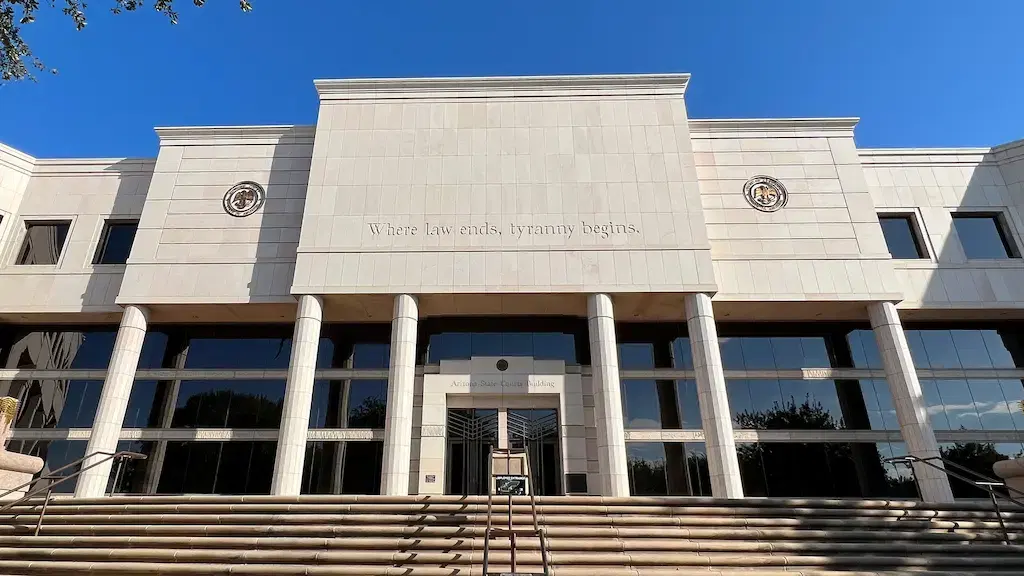
U.S. District Judge Michael Liburdi has denied Kalshi's request for a preliminary injunction and temporary restraining order (TRO), allowing Arizona's criminal case to move forward. The ruling marks a major procedural setback in the ongoing dispute between prediction markets, state gambling laws, and federal oversight.
The case sits at the center of a growing conflict involving Arizona gambling enforcement, federal commodities regulation, and emerging prediction market platforms often compared to US online sportsbooks.
Judge Liburdi Blocks Kalshi's Injunction and TRO Under Federal Law Limits
In an April 8 order, Judge Liburdi rejected Kalshi's request primarily due to the Anti-Injunction Act (AIA), a federal statute that sharply limits a federal court's ability to interfere with ongoing state criminal proceedings.
Kalshi had asked the court to halt Arizona's prosecution while it challenged the state's authority. However, Liburdi concluded that the court's "hands were tied" because the state criminal case had already begun.
Under the AIA, federal courts generally cannot stop state prosecutions unless a narrow exception applies. The judge found that Kalshi did not meet that exception threshold.
Kalshi argued that its activities fall under federal oversight. Specifically, it claimed that the Commodity Futures Trading Commission (CFTC) holds exclusive jurisdiction over its event contracts.
Despite that argument, the court ruled it could not intervene at this stage. Importantly, the decision focused more on jurisdictional limits than on a full merits analysis.
Kalshi had sought to block Arizona from enforcing criminal gambling laws, which the state argues apply because it treats prediction contracts as illegal wagering rather than financial swaps.
As a result, Arizona retains the ability to proceed with its prosecution without federal interference.
What Comes Next in Arizona's Criminal Case
The criminal case will now continue under Kris Mayes, who has taken a leading enforcement role.
Arizona prosecutors allege Kalshi operated an unlicensed gambling business. The charges include offering event contracts tied to political outcomes, including alleged wagers on the 2028 presidential election and the 2026 Arizona governor's race.
These allegations place the case at the center of a broader national debate over whether prediction markets function as legitimate financial instruments or disguised betting platforms similar to US online sportsbooks.
The stakes are especially high because the case represents one of the most aggressive state-level actions against a federally regulated exchange model.
Federal Government Enters the Legal Fight
On the same day as Kalshi's loss, the CFTC and the U.S. Department of Justice escalated the dispute by filing motions supporting federal jurisdiction over prediction markets.
This move is significant because the Anti-Injunction Act contains a key exception for actions brought by the federal government itself.
Legal observers note this could open a separate pathway for relief that Kalshi cannot access on its own.
In effect, while Kalshi lost this round, the federal government may still attempt to block state enforcement under its own authority.
Background on Arizona's Case Against Kalshi
Arizona's case stems from allegations that Kalshi offered unlicensed wagering under state law. Regulators argue that prediction contracts resemble bets rather than swaps when tied to real-world outcomes.
The case includes politically sensitive markets, such as election-based contracts, which have heightened regulatory scrutiny nationwide.
Legal analysts have noted that states are currently 4-0 against Kalshi in key early rulings, highlighting a growing trend of judicial skepticism at the state enforcement level.
Broader Impact on Prediction Markets
The ruling intensifies uncertainty for prediction market operators across the United States.
Courts remain split on whether these platforms fall under federal commodities law or state gambling authority. Some rulings favor federal exclusivity, while others allow states to enforce traditional gambling restrictions.
The outcome will directly affect how prediction markets compete with US online sportsbooks, especially as both increasingly overlap in product design.
If the split persists, the dispute may ultimately reach higher appellate courts or even the U.S. Supreme Court. For now, Arizona's case continues, and Kalshi remains under mounting legal pressure from multiple jurisdictions.
Betting Industry News Betting Industry News Betting Industry News Betting Industry NewsMore Industry News
MD Sports Betting: Sept Handle $652M, Revenue Down 20%

New Brunswick Eyeing Private iGaming Market
Sen. Ted Cruz Bill Targets Federal Sports Prediction Markets

New Jersey Mandates Data-Driven Gambling Checks

Jonathan Rodriguez
Jonathan is an avid basketball fan, and is often looking forward to the next upcoming NBA season when not checking players' stats during games. He also likes to keep his ears on the ground for the latest rumblings in the online casino industry.
This site contains commercial content. We may be compensated for the links provided on this page. The content on this page is for informational purposes only. Betting News makes no representation or warranty as to the accuracy of the information given or the outcome of any game or event.