Facial Recognition to Protect Children Act Introduced

Written by: Jonathan Rodriguez
Published: Fri Jul 17, 2026, 7:00 am ET
Read Time: 5 minutes
industry
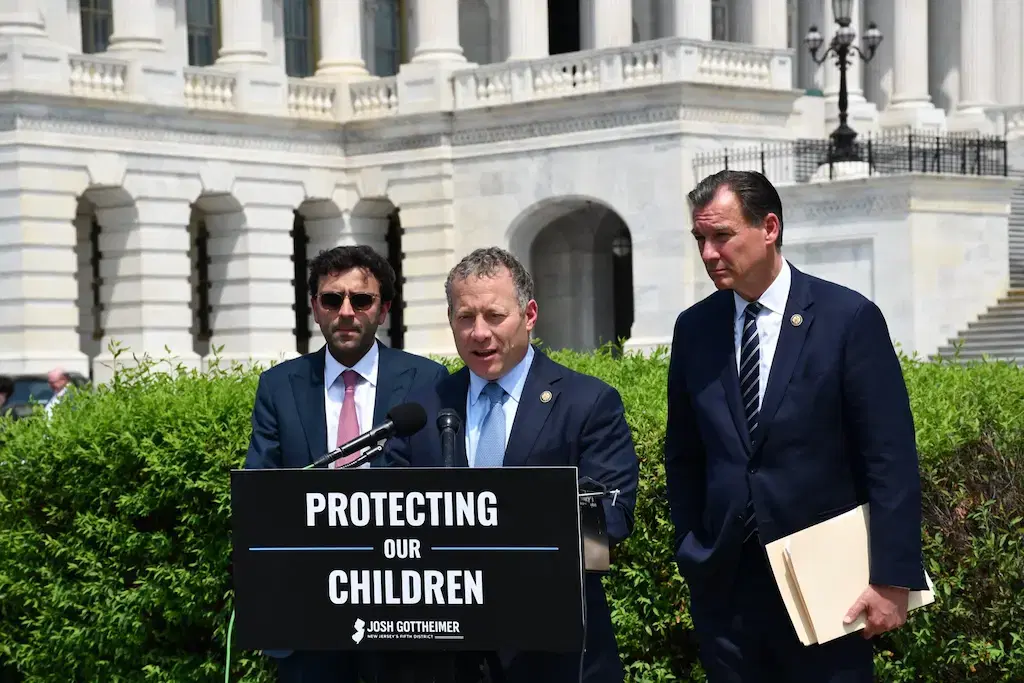
Rep. Josh Gottheimer has introduced the Facial Recognition to Protect Children Act. This bipartisan bill targets underage access to online betting platforms.
Under the Act, online sportsbooks and prediction markets are required to use facial recognition technology for age verification.
The proposal aims to address a growing concern across the USA gambling industry. Minors can sometimes access betting accounts belonging to parents, older siblings, or friends.
Gottheimer argues that existing safeguards leave too much responsibility with users and families. The New Jersey Democrat wants platforms to add another verification layer before users can bet or trade.
The bill could create new compliance requirements for US online sportsbooks and prediction markets. It also raises important questions about privacy, accuracy, and the role of facial technology in online gambling.
Facial Recognition to Protect Children Act Outlines New Verification Rules
The child protection bill would require sportsbooks and prediction markets to use facial recognition technology during key points of platform access.
The technology could operate when users log into a platform or before they place a bet. It would also apply before users complete prediction market trades.
The proposed system would read facial structures and patterns to estimate a user's age. The bill would not require platforms to store or match the user's personal biometric identity. Instead, it would rely on transient age-estimation scans.
Gottheimer said the proposal addresses a major weakness in current online betting systems:
"We're asking our kids to self-police their way past a system built entirely on the honor code. A kid can log into a parent's, an older sibling's, or a friend's account and place a bet with no verification at all. Nobody checks. That's it. That's the whole system," said Gottheimer when introducing the measure this week.
"We wouldn't accept that at a casino in Las Vegas. We shouldn't accept it on the phone in our kid's back pocket."
The proposal would therefore move age checks beyond traditional account registration procedures. It could also require platforms to verify users repeatedly throughout their betting activity.
ParentsRISE and Kalshi Support the Proposed Age-Verification Rules
The bill has attracted support from several sectors focused on child protection and online betting safety.
ParentsRISE, a parents' advocacy organization, supports the legislation. The group has highlighted concerns about minors accessing gambling products through adult accounts.
Prediction market operator Kalshi also backs the proposal. CEO Tarek Mansour described protecting minors as a top priority for the company.
Mansour also argued that age verification should become an industry standard. His support gives the bill backing from a major prediction market operator.
Kalshi has already introduced several voluntary measures aimed at preventing underage access. These measures include Face ID checks, stronger selfie verification, and two-factor authentication.
The company has also introduced additional protections for users aged 18 to 21. It has promoted responsible trading measures and provided resources for parents and families.
Gottheimer's bill would seek to make similar protections a national requirement. The proposal would cover online sportsbooks and prediction markets under the same federal standard.
The legislation has also received bipartisan support from several members of Congress. That backing could help the proposal gain attention as lawmakers debate national standards for online betting.
Underage Gambling Concerns and Privacy Protections Drive the Proposal
Underage gambling concerns sit at the center of the Facial Recognition to Protect Children Act.
Gottheimer's office cited research showing that 36% of boys aged 11 to 17 gambled during the previous year. The office also pointed to reports of underage betting in states including Iowa and Tennessee.
Tennessee sportsbooks flagged more than 400 underage accounts in 2024. That figure represented a significant increase from roughly 100 accounts in 2023.
The proposal also arrives as prediction markets face scrutiny over their lower minimum age requirements. Many regulated online sportsbooks require users to be at least 21.
Prediction markets generally allow users to participate from age 18. Critics argue that difference creates a potential regulatory gap for younger adults.
The bill attempts to address those concerns while limiting the use of persistent biometric identity data. Facial age-estimation still analyzes physical facial characteristics during the verification process.
That distinction matters because some state privacy laws define facial geometry as biometric information. The proposal's approach would instead focus on transient age-estimation scans.
Gottheimer's office therefore emphasizes age estimation without requiring platforms to store or match a user's personal biometric identity. The approach aims to strengthen child protection while limiting the retention of sensitive data.
Privacy remains central to the proposal. Facial recognition technology has attracted criticism over data collection, accuracy, and security concerns.
Why the Act Matters to US Online Sportsbooks and Prediction Markets
The proposal could have a significant impact across the USA gambling industry.
US online sportsbooks already conduct know-your-customer checks during account registration. Those processes typically verify a user's identity and age.
The Facial Recognition to Protect Children Act could add another layer of verification. Platforms might need to confirm a user's age when they log in or place a wager.
Prediction markets could face similar requirements. The legislation would bring these platforms into a shared federal age-verification framework with sportsbooks.
That development could become particularly important as prediction markets expand their presence in the US market. Lawmakers and regulators increasingly examine these platforms alongside traditional gambling operators.
The proposal could also increase compliance costs for smaller operators. Companies may need to develop or license facial age-estimation technology to meet the new requirements.
Still, supporters argue that child protection should take priority over those implementation challenges. They believe platforms should not rely solely on users' declarations during account registration.
The bill's future remains uncertain. Federal gambling standards have historically faced challenges because states traditionally regulate gambling activities.
Nevertheless, the Facial Recognition to Protect Children Act adds to growing pressure for national online betting safeguards. If passed, it could establish a new compliance standard for US online sportsbooks and prediction markets.
Betting Industry News Betting Industry News Betting Industry News Betting Industry NewsMore Industry News
MD Sports Betting: Sept Handle $652M, Revenue Down 20%

New Brunswick Eyeing Private iGaming Market
Sen. Ted Cruz Bill Targets Federal Sports Prediction Markets

New Jersey Mandates Data-Driven Gambling Checks

Jonathan Rodriguez
Jonathan is an avid basketball fan, and is often looking forward to the next upcoming NBA season when not checking players' stats during games. He also likes to keep his ears on the ground for the latest rumblings in the online casino industry.
This site contains commercial content. We may be compensated for the links provided on this page. The content on this page is for informational purposes only. Betting News makes no representation or warranty as to the accuracy of the information given or the outcome of any game or event.