Both Teams to Score Betting Guide: How to Bet on One of Soccer’s Most Popular Markets

Written by: Eddie Griffin
Published: Mon Aug 10, 2026, 6:27 pm ET
Read Time: 13 minutes
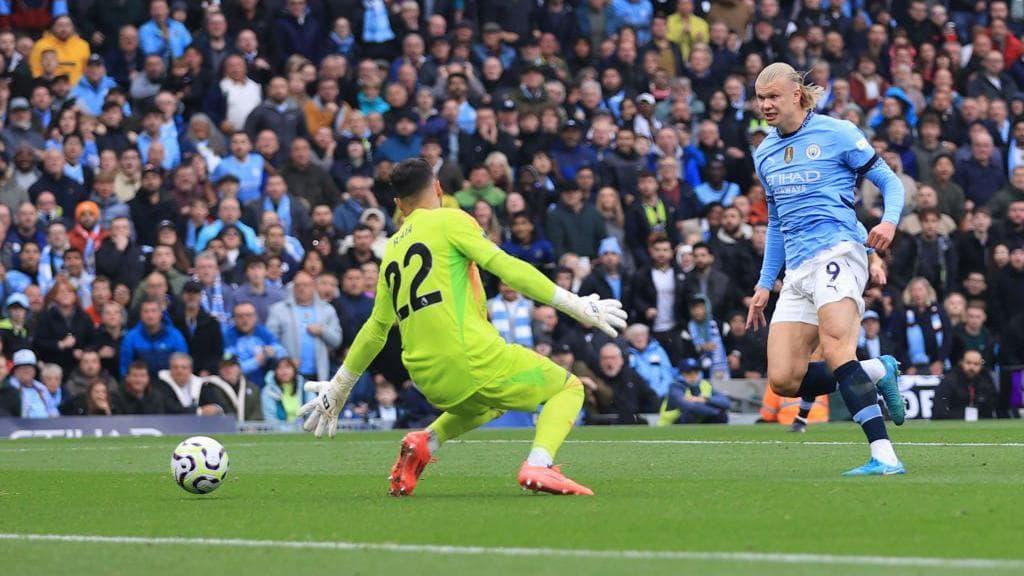
Both Teams to Score is one of the simplest soccer betting markets to understand, but deciding when to bet it requires more than finding two teams capable of scoring goals.
Commonly shortened to BTTS, the market asks whether both teams will score at least once during a match. Bettors can wager on BTTS Yes if they expect each team to find the net or BTTS No if they believe at least one team will fail to score.
For those who like to bet on soccer odds, the simplicity of the market is part of its appeal. You don't need to predict which team will win, how many total goals will be scored, or the exact final score. A 1-1 draw and a 4-3 thriller produce the same winning result for a BTTS Yes bettor.
However, evaluating a potential BTTS wager requires looking beyond goals scored in recent matches. Expected goals, defensive performance, home and away splits, playing styles, injuries, expected lineups, and the circumstances surrounding the match can all provide valuable context.
In this guide, we will explain how Both Teams to Score betting works, what to consider when handicapping BTTS markets, how BTTS differs from totals betting, and strategies that can help you evaluate potential wagers.
- Both Teams to Score Betting Explained
- How Does BTTS Betting Work?
- What to Look for with BTTS Betting
- Both Teams to Score Betting Strategy & Tips
- Common BTTS Betting Mistakes
- Best Sites for BTTS Betting
- Is BTTS Betting Worth It?
- FAQ
What Is Both Teams to Score Betting?
Both Teams to Score betting is a soccer market based on whether each team scores at least one goal during a match.
Sportsbooks such as Lucky Rebel and BetOnline typically offer two options:
Both Teams to Score — Yes: Both teams must score at least once.
Both Teams to Score — No: At least one team must finish without scoring.
A typical market might look like this:
| Both Teams to Score | Odds |
| Yes | -120 |
| No | +100 |
If you wager $120 on BTTS Yes at -120, you would make a $100 profit if both teams score. A $100 wager on BTTS No at +100 would make a $100 profit if either team keeps a clean sheet.
The final result of the match doesn't otherwise matter.
A 1-1 draw, 2-1 home win, or 4-2 away win would all cash a BTTS Yes wager because both teams scored.
Meanwhile, results such as 0-0, 1-0, 2-0, or 0-3 would cash BTTS No because at least one team failed to score.
How Does BTTS Betting Work?
Both Teams to Score is different from betting on which team will win because the match result has no direct effect on the wager.
Suppose Manchester City is a heavy favorite against a lower-ranked opponent in an English Premier League match. You might believe City will win but also expect the opponent to create enough opportunities to score.
Instead of betting City on the three-way moneyline, you could wager on BTTS Yes. If the match finishes 3-1, City wins and the BTTS wager also cashes. But if City dominates and wins 3-0, BTTS Yes loses despite your expectation of a City victory being correct.
The same principle applies to BTTS No. You aren't necessarily predicting a low-scoring match. You are predicting that at least one team will fail to score.
A 5-0 result would cash BTTS No just as a 1-0 result would.
Does Extra Time Count for BTTS Betting?
Standard Both Teams to Score wagers are generally settled using the score after 90 minutes plus stoppage time.
Extra time and penalty shootouts in knockout competitions typically don't count unless the sportsbook specifically states otherwise.
This distinction is less relevant when betting on regular-season league matches, where draws stand after 90 minutes. However, it can become important when betting BTTS in the knockout stage of the UEFA Champions League, the FIFA World Cup, or other tournaments or cup competitions that may include extra time or penalties.
Always check the sportsbook's rules if you're betting on a match where extra time is possible.
What Should You Look for When Betting Both Teams to Score?
Because the market requires both teams to contribute, handicapping BTTS requires evaluating each side's ability to score and prevent goals.
A prolific attacking team alone doesn't make BTTS Yes attractive. If its opponent rarely scores, a one-sided result may be more likely.
Likewise, two teams with modest scoring averages can still produce an interesting BTTS matchup if both regularly concede quality opportunities.
Goals Scored and Conceded
Goals scored and conceded provide an obvious starting point.
How frequently does each team score? How often do they keep clean sheets? Are they regularly conceding goals even when winning matches?
Looking at averages can help establish the general scoring environment surrounding each team, but averages alone can hide important information.
A team averaging two goals per match may have scored five in one game and failed to score in two others. For BTTS betting, consistency of scoring can be just as relevant as the overall average.
The same applies defensively. Rather than only looking at total goals conceded, consider how frequently the team actually prevents its opponents from scoring.
Home and Away Performance
Soccer teams can perform very differently at home and away.
A club that consistently creates scoring opportunities at home may be far less dangerous on the road. Likewise, a strong defensive team may keep numerous clean sheets at home but concede more frequently away.
When evaluating BTTS, compare the home team's home performances with the away team's road performances rather than relying solely on overall season statistics.
These splits become more useful as the season progresses and the sample size grows.
Recent BTTS Results
Looking at how frequently BTTS Yes or No has occurred in each team's recent matches can provide useful context.
If BTTS has cashed in eight of a team's last ten matches, it may indicate a combination of reliable attacking production and defensive vulnerability.
But historical BTTS results should not become a betting system on their own.
A team isn't "due" for BTTS No because both teams have scored in six consecutive matches, nor does a long BTTS Yes streak guarantee that the pattern will continue.
Use those results to investigate why both teams have been scoring rather than simply betting on the trend to repeat.
Expected Goals (xG) and Expected Goals Against (xGA)
Expected goals can provide more context than final scores alone.
A team may have scored twice despite creating very few high-quality opportunities, while another may have been held scoreless despite generating several strong chances.
Expected goals (xG) attempts to measure the quality of scoring opportunities a team creates. Expected goals against (xGA) provides similar insight into the chances a team allows.
For BTTS bettors, these metrics can help identify teams whose recent results may not fully reflect their underlying attacking or defensive performance.
A team that has failed to score in consecutive matches but continues to produce strong xG numbers may still be creating enough opportunities to warrant consideration for BTTS Yes. Conversely, a team consistently scoring from low-quality chances may be difficult to rely on if that finishing proves unsustainable.
Playing Styles and Matchups
Statistics become more useful when considered alongside how the teams actually play.
Some teams press aggressively, attack with numbers, and accept the defensive risks that come with that approach. Others defend deeper, prioritize limiting space, and are comfortable playing lower-scoring matches.
The interaction between those styles can influence BTTS probability.
Two aggressive teams may create an open match with opportunities at both ends. A dominant possession team facing an opponent that sits deep may produce a much more one-sided pattern.
Consider not only whether each team is good offensively or defensively, but how their strengths and weaknesses match up with the opponent.
Injuries, Suspensions, and Expected Lineups
Team news can significantly change the outlook for a BTTS wager.
Missing a leading striker or creative midfielder can reduce a team's attacking threat, while the absence of an important defender or goalkeeper can make a previously strong defense more vulnerable.
Expected lineups can also reveal tactical intent.
A manager resting attacking players because of fixture congestion or fielding a more defensive formation may change the scoring outlook. Conversely, an unusually attacking lineup can create opportunities while potentially leaving more space for the opponent.
Check confirmed lineups when possible before placing a wager, particularly when squad rotation is a realistic possibility.
Match Situation and Motivation
The circumstances surrounding a match can influence how teams approach it.
A club needing three points late in the season may be more willing to take risks than one satisfied with a draw. Relegation battles, title races, qualification scenarios, and two-leg knockout ties can all affect tactics.
However, motivation shouldn't be reduced to simplistic assumptions such as "they need to win, so they'll score."
Both teams may desperately need a result and still play cautiously because neither wants to make the first mistake.
Use the match situation to understand potential tactical approaches rather than treating motivation as a direct predictor of goals.
Does the League Matter When Betting BTTS?
Scoring environments can differ considerably between soccer leagues and competitions.
Some leagues historically produce more goals, while others may feature more defensive styles, slower tempos, or greater competitive imbalance.
That can influence how sportsbooks price Both Teams to Score markets.
However, simply identifying a league with a high historical BTTS percentage isn't enough to create a profitable strategy. Sportsbooks have access to the same information and can adjust their odds accordingly.
League trends are most useful as background context.
Consider the characteristics of the competition, but give greater weight to the teams involved, their current performance, the matchup, and the available price.
BTTS Betting Strategy and Tips
Understanding the market is straightforward. Finding worthwhile BTTS bets requires determining whether the available odds accurately reflect the chances of both teams scoring.
Evaluate Both Teams Separately
One useful way to approach BTTS is to ask two questions:
How likely is the home team to score?
How likely is the away team to score?
This helps prevent one strong attack or poor defense from dominating your analysis.
If you have strong reasons to believe one team will struggle to score, BTTS Yes may not be attractive regardless of how many goals you expect from the opponent.
Look Beyond Final Scores
A team's recent results tell you what happened, but not always how it happened.
Shots, shots on target, xG, big chances, possession in dangerous areas, and other attacking metrics can provide additional context about whether recent scoring results are sustainable.
The same applies defensively.
A team that has recorded consecutive clean sheets while allowing numerous high-quality opportunities may not be defending as well as the scorelines suggest.
Don't Ignore BTTS No
BTTS Yes can be more appealing psychologically because you're rooting for goals from both teams, but there are always two sides to the market.
Matches involving an elite defense, a poor attacking side, or a matchup likely to produce one-way traffic can make BTTS No worth considering.
The question isn't whether BTTS Yes is likely. It is whether Yes or No offers better value at the available odds.
Consider the Price
A matchup can look ideal for both teams to score and still be a poor bet if the odds are too short.
If BTTS Yes is priced at -200, the implied probability is approximately 66.7 percent. Your analysis therefore needs to justify a very high likelihood of both teams scoring before that price becomes attractive.
As with any sports bet, identifying the most likely outcome isn't enough. You also need to decide whether the potential return justifies the risk.
How BTTS and Goal Totals Can Complement Each Other
Both Teams to Score and Over/Under betting are closely related, but they aren't interchangeable. Instead of viewing them as competing markets, think of them as different ways to express an opinion about how a match is likely to unfold.
If you expect an open match with scoring opportunities at both ends, BTTS Yes and Over 2.5 goals may both deserve consideration. Conversely, if you expect one team to dominate while limiting its opponent's chances, an Over bet may make more sense than BTTS Yes.
Before placing your wager, consider whether you expect both teams to contribute to the scoring or whether one side is likely to account for most of the goals. That distinction can help determine which market better reflects your opinion of the match.
Common BTTS Betting Mistakes
Both Teams to Score may be simple to understand, but several mistakes can lead bettors toward poor wagers.
Blindly following BTTS trends: A long run of BTTS Yes or No results doesn't guarantee that the pattern will continue. Understand what has produced the trend.
Focusing only on attacking strength: Two strong attacking teams don't automatically produce BTTS Yes if one is also capable of shutting the other down.
Ignoring home and away splits: Overall statistics may hide substantial differences in how teams perform depending on venue.
Treating BTTS like an Over bet: A high projected goal total doesn't necessarily mean both teams are likely to contribute.
Ignoring lineups: Missing attackers, defenders, or goalkeepers can materially change the matchup.
Betting without considering the odds: Even a strong BTTS prediction can be a poor wager at an unattractive price.
Best Betting Sites for Both Teams to Score Betting
Both Teams to Score is widely available at top online sportsbooks and can typically be found across major domestic leagues, international competitions, and tournaments.
The depth of soccer coverage can still vary considerably between sportsbooks. Some offer extensive BTTS markets alongside alternative goal totals, props, same game parlays, and live betting, while others provide a more limited selection.
Bettors who regularly wager on soccer should consider factors such as market depth, live betting availability, competitive odds, and coverage of the leagues and competitions they follow.
Some soccer betting sites we recommend for Both Teams to Score betting are Lucky Rebel, BetOnline, Everygame, and Bovada. All of these sites offer BTTS odds for many notable soccer matchups, and you may even see boosted odds or special promotions surrounding BTTS bets at these sites.
Is Both Teams to Score Betting Worth It?
Both Teams to Score is an appealing soccer betting market because the objective is straightforward: determine whether each team will score at least once.
The analysis behind that decision can be considerably more detailed.
Goals scored and conceded, home and away splits, expected goals, playing styles, lineups, defensive quality, and match circumstances can all help bettors assess the chances of both teams finding the net.
Most importantly, evaluate the two teams individually rather than simply deciding whether a match "looks like it will have goals." BTTS and totals are related markets, but they answer different questions.
As always, the available odds matter. A strong case for both teams scoring doesn't automatically create a worthwhile wager if the sportsbook's price already reflects that probability.
Learn More About Soccer Betting
Both Teams to Score is only one of the many markets available to soccer bettors.
Our Soccer Betting Guide covers the fundamentals of betting on the sport, including three-way moneylines, spreads and Asian handicaps, totals, props, futures, parlays, and live betting.
Betting News also provides soccer odds, expert picks, predictions, and betting analysis across major domestic leagues and international competitions throughout the year.
For bettors looking to explore individual markets in greater detail, our soccer betting guides include dedicated resources covering topics such as first and anytime goalscorer betting, while our league and tournament guides provide more specific insight into betting on competitions such as the English Premier League.