Tribal Leaders Push Congress on Prediction Markets

Written by: Jonathan Rodriguez
Published: Fri Aug 07, 2026, 8:00 am ET
Read Time: 5 minutes
industry
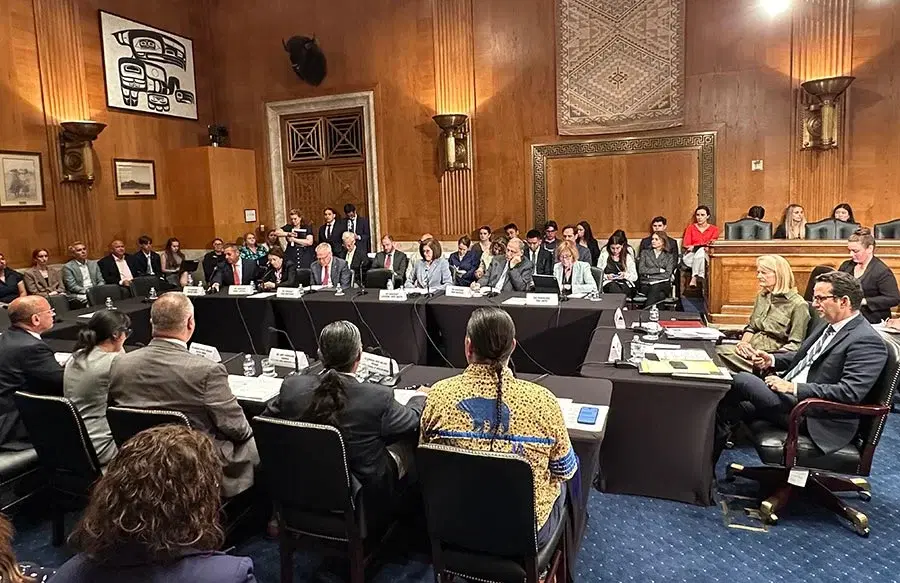
Tribal leaders are calling on Congress to protect the framework established under the Indian Gaming Regulatory Act (IGRA). Their appeal follows a recent Senate Committee on Indian Affairs roundtable focused on sports-related prediction markets and their growing presence across the United States.
The discussion focused on whether prediction platforms like Kalshi and Polymarket function as sportsbooks to bypass gaming laws. Tribal representatives argued that the current regulatory structure gives these companies an unfair advantage over tribal operators.
Notably, neither the Commodity Futures Trading Commission (CFTC) nor representatives from Kalshi, Polymarket, or other prediction market companies participated in the roundtable. As a result, the hearing largely featured testimony from tribal leaders and lawmakers concerned about the industry's expansion.
The debate also arrives as lawmakers continue weighing proposals that could reshape USA gambling regulations.
At the same time, the issue has become increasingly important for US online sportsbooks, tribal casinos, and state gaming regulators.
Tribal Leaders Argue Prediction Markets Bypass IGRA Protections
Lead tribal representatives told senators that prediction market operators have created a regulatory loophole. Prediction markets offer sports event contracts under federal commodities law instead of state gaming laws.
They argued that this framework allows companies to:
- Avoid tribal-state gaming compacts
- Bypass state gaming regulators
- Circumvent IGRA protections
- Compete directly with tribal sportsbooks without following the same rules
According to tribal representatives, sports prediction contracts function much like traditional sports wagering. They believe the products should therefore follow the same legal and regulatory standards imposed on licensed sportsbooks.
Several tribal leaders warned that allowing separate federal oversight weakens decades of tribal gaming policy. They also argued that the approach undermines agreements negotiated between tribes and state governments.
In addition, tribal officials expressed concern that revenue generated through prediction markets could reduce funding for essential tribal services. Many tribes rely on gaming income to support healthcare, housing, education, infrastructure, and public safety.
National Congress of American Indians President Mark Macarro said some California tribes have already experienced the financial effects. He estimated that tribal gaming revenue in the state has declined by roughly 5% as consumers increasingly turn to prediction market platforms.
While the figure reflects tribal observations rather than an independently verified industry study, leaders cited it as evidence that the competitive impact is already being felt.
Tribal Leaders Seek Meaningful Consultation and Congressional Action
National Congress of American Indians President Mark Macarro urged lawmakers to require greater federal consultation before prediction market products receive approval.
"The CFTC is advancing prediction market products that function like gaming without ever sitting down with the tribes whose economies and legal rights are directly in the crosshairs," said Macarro, who also serves as chairman of the Pechanga Band of Mission Indians in California.
Macarro added that there has not been a formal notice, nor a meaningful dialogue, not even an acknowledgment that, as a federal agency, the CFTC does have a responsibility to tribal nations to consult.
"This failure is especially glaring, given the stakes," Macarro added.
Macarro argued that tribal governments deserve a formal voice whenever federal agencies consider products that could directly affect tribal gaming operations. He also urged Congress to reinforce tribal sovereignty by ensuring agencies meet their consultation obligations.
Tehassi Hill Questions CFTC Oversight
Indian Gaming Association Vice Chairman Tehassi Hill delivered one of the hearing's strongest criticisms of the Commodity Futures Trading Commission.
Hill argued that companies such as Kalshi and Polymarket are repackaging traditional sports betting instead of creating genuinely new financial products.
"They claim to be innovators, but they have invented nothing," Hill stated.
Hill maintained that the contracts mirror sportsbook wagers despite being offered under federal commodities regulations. He also warned that the CFTC has allowed prediction markets to expand without adequately considering their impact on tribal governments and existing gaming laws.
His remarks reflected broader concerns that federal oversight has failed to keep pace with rapidly evolving wagering products.
Senators Consider Legislative Fixes
Lawmakers used the roundtable to discuss several possible legislative responses that could clarify federal law.
Committee Chair Sen. Lisa Murkowski (R-Alaska) opened the discussion by emphasizing the need to examine how emerging prediction market products interact with long-standing tribal gaming protections.
Meanwhile, Committee Vice Chair Sen. Brian Schatz (D-Hawaii) said the consumer experience offered by sports prediction markets is effectively "identical to sports betting". This reinforces many of the concerns raised by tribal leaders.
One proposal would amend the CLARITY Act to explicitly state that sports and casino-related event contracts remain subject to:
- State gaming laws
- Tribal gaming laws
- IGRA requirements
Supporters believe such language would remove uncertainty surrounding prediction markets while preserving existing gaming authority.
Push for Prediction Markets are Gambling Act
Senators also discussed the Prediction Markets Are Gambling Act (S. 4160), introduced by Sen. Adam Schiff. The bill would classify sports-related prediction markets as gambling activities rather than commodity contracts.
If enacted, the legislation would place these products under established gaming laws instead of federal commodities regulation.
The proposals represent Congress' latest effort to address growing tension between prediction market operators, tribal governments, state regulators, and federal agencies.
Although lawmakers have not committed to a specific legislative path, the Senate roundtable demonstrated growing bipartisan concern over prediction markets' impact on tribal gaming.
The outcome could significantly influence the future of USA gambling, tribal sovereignty, and the competitive landscape for US online sportsbooks.
Betting Industry News Betting Industry News Betting Industry News Betting Industry NewsMore Industry News

Ohio iGaming Bill Could Bring Online Casinos Closer
NFL Bans Prediction Market Ads During Games
Missouri AG Targets Prediction Markets Over Sports Bets
Maryland Online Casino Push Misses 2026 Ballot

Jonathan Rodriguez
Jonathan is an avid basketball fan, and is often looking forward to the next upcoming NBA season when not checking players' stats during games. He also likes to keep his ears on the ground for the latest rumblings in the online casino industry.
This site contains commercial content. We may be compensated for the links provided on this page. The content on this page is for informational purposes only. Betting News makes no representation or warranty as to the accuracy of the information given or the outcome of any game or event.