Judge Rejects Kalshi’s New York Injunction Request

Written by: Jonathan Rodriguez
Published: Thu Jul 09, 2026, 7:00 am ET
Read Time: 4 minutes
industry
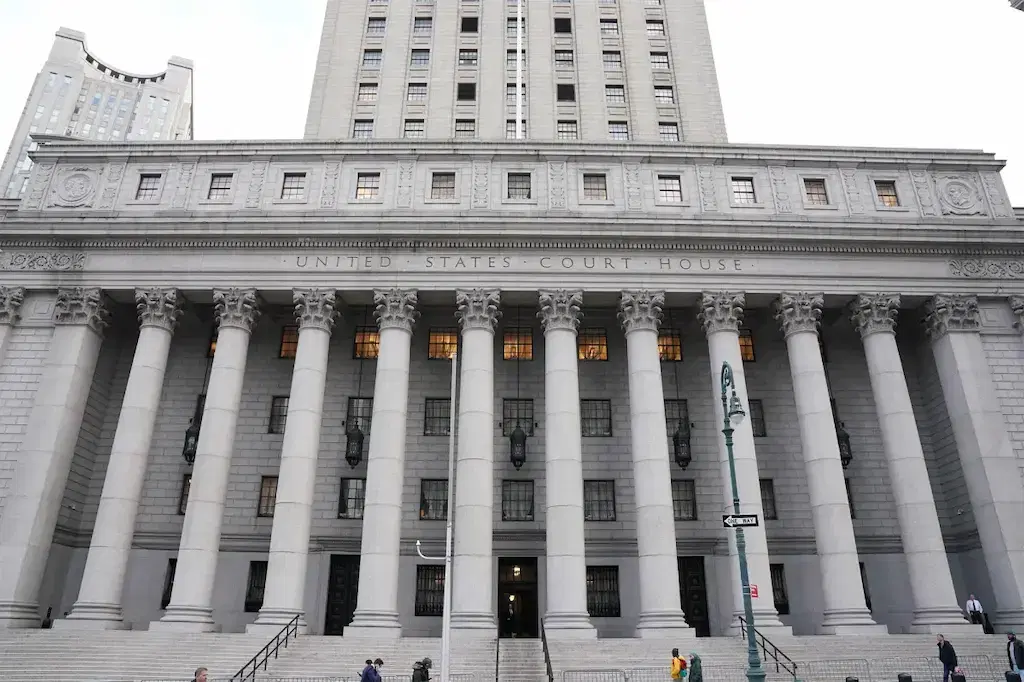
A federal judge has denied Kalshi's New York injunction request, handing state regulators a significant legal victory. The decision allows New York officials to continue enforcing state gambling laws while the broader lawsuit moves forward.
Judge Analisa Torres of the U.S. District Court for the Southern District of New York denied Kalshi's motion for a preliminary injunction. The company sought to prevent New York officials from taking action against its sports event contracts, arguing that federal law preempts state gambling regulations.
The ruling marks another important chapter in the growing conflict between federally regulated prediction markets and state gaming regulators. It also raises fresh questions about how prediction markets should coexist with US online sportsbooks and existing New York gambling laws.
Judge Torres: Kalshi's Injunction Request Failed to Prove Federal Law Overrides New York Gambling Laws
Kalshi argued that, as a federally regulated Designated Contract Market overseen by the Commodity Futures Trading Commission (CFTC), its event contracts fall exclusively under the Commodity Exchange Act (CEA). According to the company, New York cannot enforce its gambling laws against federally approved prediction markets.
Judge Torres rejected that argument.
In her ruling, Torres concluded that Kalshi failed to demonstrate it could not comply with both federal commodities regulations and New York's gambling framework.
"Kalshi has not shown that it is impossible to comply with both New York gambling laws and the CEA… There is nothing preventing Kalshi from obtaining a license pursuant to New York law and establishing a category of New York market participants that does not discriminate within that New York-resident category."
Torres also found that New York's gambling statutes advance separate state interests that do not conflict with federal law. Those interests include:
- Preventing gambling addiction
- Protecting sports integrity
- Regulating unlicensed gambling activity
- Protecting consumers
Additionally, the court referenced the Dodd-Frank Act's "Special Rule." The ruling noted that Congress specifically recognized event contracts tied to gaming or unlawful activity as deserving additional scrutiny. That finding weakened Kalshi's claim that Congress intended to give the CFTC exclusive authority over every prediction market.
Rather than finding a direct conflict between state and federal law, Torres concluded that both regulatory frameworks can operate simultaneously. As a result, New York officials remain free to enforce state gambling laws while the underlying lawsuit proceeds.
Kalshi Immediately Appeals as New York Officials Backs the Ruling
Kalshi responded quickly to the decision.
The company filed a notice of appeal on Tuesday with the U.S. Court of Appeals for the Second Circuit. Through its appeal, Kalshi hopes to overturn Torres' decision and restore its argument that federal law preempts state regulation.
Meanwhile, New York leaders praised the ruling as an important victory for consumer protection and state oversight.
"New York's gambling laws are designed to protect consumers. Kalshi tried to ignore them. Yesterday, they lost in court," said New York Gov. Kathy Hochul and State Attorney General Letitia James in a joint statement on Wednesday. "We will continue to hold all gambling platforms accountable to the law – and that includes prediction markets."
Supporters of the decision also argue that allowing unlicensed prediction markets to expand without state oversight could undermine licensed gaming operators. They contend that regulators should apply the same consumer protections across prediction markets, sportsbooks, and casinos.
What's Next for New York Regulators?
The denial of Kalshi's injunction allows New York regulators to continue enforcing state gambling laws while litigation continues.
State officials have consistently argued that sports event contracts resemble sports betting and should comply with the same licensing requirements imposed on regulated operators. The latest ruling strengthens that position, although the Second Circuit could ultimately reach a different conclusion on appeal.
Until then, New York appears prepared to continue challenging prediction market operators that offer sports-related contracts without state authorization.
The outcome could also influence future regulatory discussions involving US online sportsbooks, particularly as prediction markets continue expanding into sports-based offerings that resemble traditional wagering products.
Kalshi's Legal Battles Continue Across Multiple States
New York is only one front in Kalshi's expanding legal campaign.
The company recently appealed another unfavorable decision in Arizona after a federal judge denied its request for a preliminary injunction. That case is now heading to the U.S. Court of Appeals for the Ninth Circuit, where Kalshi will again argue that the Commodity Exchange Act preempts state gambling laws.
Kalshi also remains locked in a separate dispute with the Ohio Casino Control Commission (OCCC). The company is challenging a $5 million fine imposed by the regulator after Ohio concluded that Kalshi offered unauthorized sports event contracts within the state.
Those cases join several ongoing legal disputes across the country as states seek to define the boundaries between regulated prediction markets and traditional sports betting.
With appeals now pending in both the Second and Ninth Circuits, the legal debate surrounding prediction markets continues to intensify. Future appellate decisions could shape how federal commodities law interacts with state gambling regulations for years to come.
Betting Industry News Betting Industry News Betting Industry News Betting Industry NewsMore Industry News
MD Sports Betting: Sept Handle $652M, Revenue Down 20%

New Brunswick Eyeing Private iGaming Market
Sen. Ted Cruz Bill Targets Federal Sports Prediction Markets

New Jersey Mandates Data-Driven Gambling Checks

Jonathan Rodriguez
Jonathan is an avid basketball fan, and is often looking forward to the next upcoming NBA season when not checking players' stats during games. He also likes to keep his ears on the ground for the latest rumblings in the online casino industry.
This site contains commercial content. We may be compensated for the links provided on this page. The content on this page is for informational purposes only. Betting News makes no representation or warranty as to the accuracy of the information given or the outcome of any game or event.