Illinois Court Backs Kalshi in Prediction Market Case

Written by: Jonathan Rodriguez
Published: Tue Oct 06, 2026, 7:00 am ET
Read Time: 5 minutes
industry
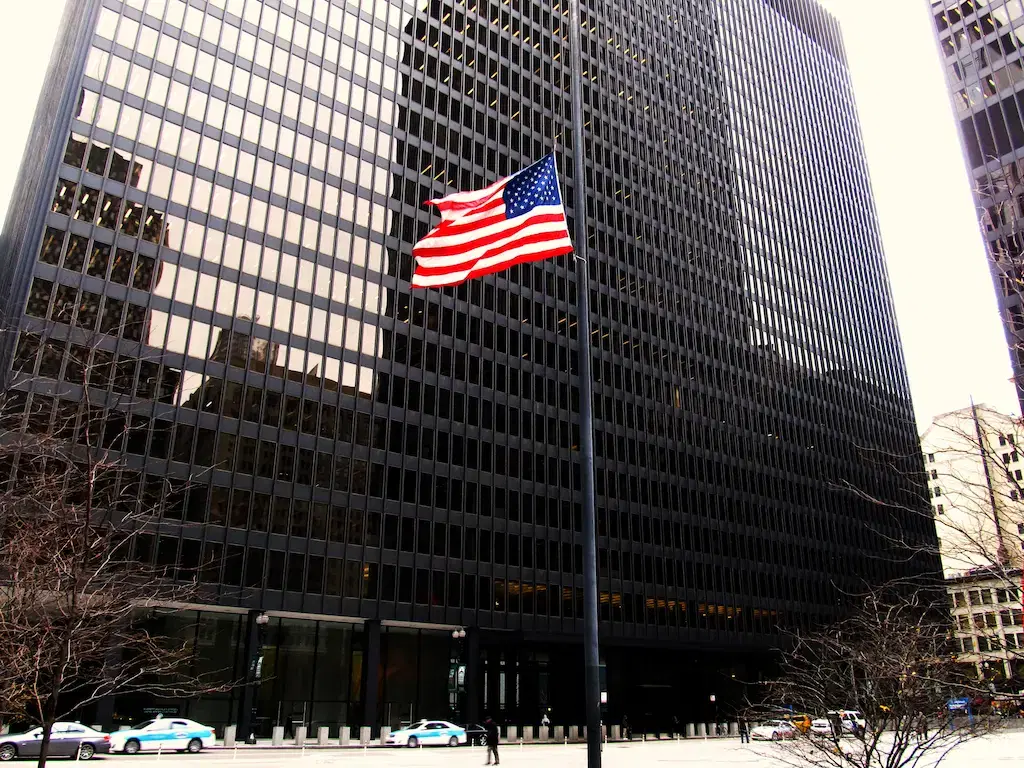
A federal judge in Illinois has handed Kalshi and the Commodity Futures Trading Commission (CFTC) a major legal victory.
U.S. District Judge Martha M. Pacold granted preliminary injunction motions involving Kalshi, Coinbase, and the CFTC. The decision limits Illinois' ability to apply its sports-wagering laws to certain prediction-market contracts.
The litigation also includes the Coalition for Fair Markets and OG, a Crypto.com affiliate. Their involvement highlights the broader industry interest in the fight over federally regulated prediction markets.
The ruling could influence the wider dispute between prediction markets and state gambling regulators. Courts have issued conflicting decisions as states challenge sports contracts offered by federally regulated exchanges.
Judge Pacold Backs Kalshi's Sports Contracts
Pacold's October 2 opinion found that Kalshi's core sports-event contracts likely qualify as swaps under the Commodity Exchange Act.
The judge also found that Illinois is likely attempting to control the sale of those federally regulated swaps. As a result, several parts of the state's gambling framework likely conflict with federal law.
Pacold's opinion backs the companies' ability to offer contracts on who wins a title game. They can do so without submitting to Illinois' sports-wagering licensing regime.
The judge summarized the unusual nature of the dispute with a memorable observation. She wrote that the instruments are "likely swaps as defined by the Commodity Exchange Act – they just happen to be swaps that people find entertaining and fun."
That line quickly became one of the most notable passages from the ruling. It also captures the central legal question surrounding prediction markets.
The products may resemble sports wagers to state regulators. However, their classification under federal commodities law can place them under a different regulatory framework.
Illinois Gambling Rules Face Federal Preemption
Illinois sought to treat certain prediction-market contracts as sports wagers. Its framework requires companies involved in sports wagering to obtain state licenses.
The state also threatened penalties for certain unlicensed wagering activity. Those provisions created a direct conflict with Kalshi's federally regulated business model.
Pacold found that several Illinois gambling provisions likely face federal preemption. She also noted that the state's restrictions could force Kalshi to create a separate market for Illinois users.
That result would place additional restrictions on a platform operating under federal commodities regulation.
For the broader US betting market, the distinction remains important. US online sportsbooks already operate under state-specific licensing systems. Prediction markets instead argue for federal oversight of their event contracts.
Therefore, the Illinois case could shape how regulators approach the boundary between sports betting and federally regulated prediction markets.
CFTC Strengthens Its Federal Oversight Argument
The CFTC joined the litigation as Illinois moved against prediction-market activity.
The Coalition for Fair Markets and OG also joined the legal challenge. Coinbase separately brought claims tied to its involvement with prediction-market contracts.
The collection of plaintiffs and intervenors shows that the dispute extends beyond Kalshi. Financial platforms, prediction-market advocates, and federally regulated exchanges all have an interest in the outcome.
The CFTC has argued that federally regulated exchanges should not face conflicting state requirements for contracts under its jurisdiction.
Pacold's opinion largely supports that position at the preliminary stage. She found that the plaintiffs showed a likelihood of success on their federal-preemption claims.
The judge also found that the plaintiffs could face irreparable harm without an injunction. They otherwise could face a choice between stopping operations and risking civil or criminal penalties.
Pacold further concluded that the public interest favored protecting federal authority over the relevant swaps.
Illinois Fees Remain Unresolved
However, the ruling does not settle every issue between Illinois and the prediction-market companies.
Pacold specifically left challenges to Illinois' wagering fees unresolved. The court found that additional arguments were necessary before determining whether those fees are preempted.
Illinois introduced a transaction fee covering certain sports-related exchange wagers. The law applies a 1.75% fee to the first five million exchange wagers.
It then raises the fee to 3.5% for subsequent exchange wagers during the same fiscal year. Existing wagering fees also remain part of the dispute.
Consequently, the latest ruling should not be viewed as a complete victory for Kalshi and its allies.
The companies secured important relief against licensing and related restrictions. However, the financial obligations imposed by Illinois remain subject to further litigation.
Court Sets October 29 Deadline
Pacold also established the next procedural step in the case.
She ordered the parties to confer and submit a proposed injunction consistent with her opinion by October 29. The filing will help define the practical scope of the preliminary relief.
The deadline gives Illinois and the plaintiffs an opportunity to address the precise provisions covered by the injunction.
Meanwhile, the underlying cases will continue beyond the preliminary ruling.
Ruling Adds to Prediction-market Legal Divide
The Illinois decision also adds another layer to an increasingly divided legal landscape.
A federal judge in Wisconsin previously rejected the CFTC's request for a preliminary injunction. That ruling found that the agency had not established that sports-event contracts likely qualified as swaps.
Illinois has now reached the opposite preliminary conclusion within the same federal appellate circuit.
That developing split could make future appellate review especially important. It also highlights the uncertainty surrounding prediction markets that offer sports contracts across state lines.
For now, Kalshi and the CFTC have gained a significant advantage in Illinois. Coinbase, the Coalition for Fair Markets, and OG also stand to benefit from the preliminary relief.
However, the unresolved fee questions and competing court decisions mean the broader regulatory battle remains far from finished.
Betting Industry News Betting Industry News Betting Industry News Betting Industry NewsMore Industry News
theScore Bet Inks Multi-Year NFL Partnership in Canada

Ohio Sports Betting Revenue Falls 19.9% in August 2026
Iowa Sports Betting Handle Hits $185.5M in August 2026

New Hampshire SB 104 Online Casino Bill Advances

Jonathan Rodriguez
Jonathan is an avid basketball fan, and is often looking forward to the next upcoming NBA season when not checking players' stats during games. He also likes to keep his ears on the ground for the latest rumblings in the online casino industry.
This site contains commercial content. We may be compensated for the links provided on this page. The content on this page is for informational purposes only. Betting News makes no representation or warranty as to the accuracy of the information given or the outcome of any game or event.