US Tribal Leaders Warn CFTC Sports Markets Risk Compacts

Written by: Jonathan Rodriguez
Published: Tue Apr 21, 2026, 11:00 am ET
Read Time: 4 minutes
industry
U.S. tribal gaming leaders are intensifying their warnings over a potential regulatory shift by the Commodity Futures Trading Commission (CFTC). They argue that the CFTC's expanded approval of sports-related prediction markets could undermine federal oversight, and more critically, destabilize tribal gaming compacts.
As the agency weighs allowing event contracts tied to sports outcomes to trade on federally regulated exchanges, tribal officials say the move could override existing state and tribal authority while opening the door to unregulated competition.
Why US Tribal Leaders Are Warning About CFTC's Approach to Event Contracts
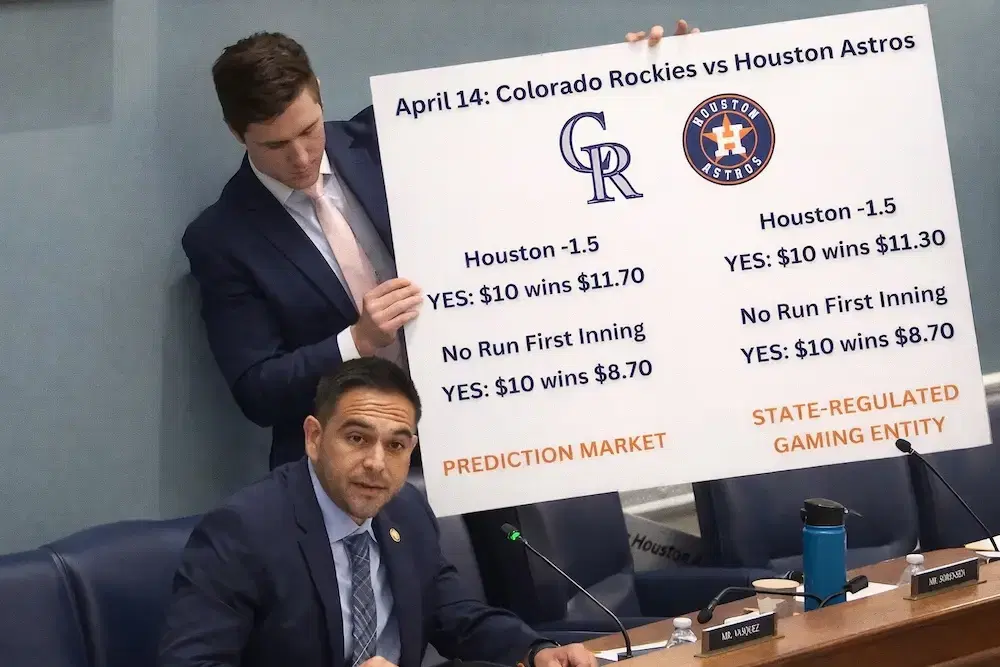
At the center of the debate is the CFTC's consideration of "event contracts," derivatives that allow users to trade on the outcome of real-world events, including sports games. Platforms such as Kalshi and Polymarket have been at the forefront of pushing these products into the mainstream.
The CFTC appears to be leaning toward regulating these contracts as financial instruments, meaning they could be listed on federally regulated exchanges. Crucially, this framework could allow federal law to preempt or override state gambling laws and tribal gaming compacts, enabling nationwide access without adhering to localized regulatory systems.
Additionally, tribal leaders argue that such a shift would fundamentally reshape the U.S. betting landscape, creating what amounts to a parallel sports wagering market operating outside the rules that govern casinos and US online sportsbooks today.
Key Concerns Raised by Tribal Gaming Leaders
Tribal Gaming Compacts
Under the Indian Gaming Regulatory Act (IGRA), tribal-state compacts grant tribes negotiated rights, often including exclusivity over sports betting in certain jurisdictions. Leaders warn that federally approved prediction markets could bypass these agreements entirely, effectively nullifying years of negotiation and legal precedent.
Loss of Revenue and Jobs
Tribal gaming revenues fund essential services such as healthcare, education, and infrastructure. If prediction market platforms capture betting activity without being subject to the same tax and revenue-sharing obligations, tribes could lose billions in funding, along with jobs tied to casino operations.
Sovereignty and Legal Authority
The issue extends beyond economics. Tribal leaders argue that allowing federally regulated exchanges to offer sports contracts would erode tribal sovereignty, weakening the legal framework that ensures tribes can govern gaming activity on their lands.
Leaders have been increasingly vocal. David Bean emphasized that the issue represents a direct challenge to tribal rights. Meanwhile, James Siva warned the development could be "the largest and fastest-moving threat our industry has ever seen."
Debate Over Whether Event Contracts Are "Just Gambling"
A central point of contention is how these products are defined. Tribal leaders and lawmakers argue that sports event contracts are functionally indistinguishable from traditional sportsbook wagers.
From a consumer standpoint, both involve placing money on the outcome of a game with similar mechanics and payouts.
Critics say labeling them as financial instruments is a regulatory workaround, allowing companies to sidestep established gambling laws.
The concern goes beyond sports. Lawmakers such as Jim Costa have warned that these markets could expand into betting on elections, geopolitical conflicts, and even human suffering. This raises ethical and regulatory red flags that extend far beyond traditional gaming.
Government and Political Reaction
The debate has quickly drawn political attention. Several lawmakers have echoed tribal concerns, questioning whether the CFTC is exceeding its mandate and enabling a system that bypasses state and tribal oversight.
This friction reached a boiling point during the April 16 House Agriculture Committee hearing, where Chairman Selig faced sharp bipartisan criticism for what lawmakers described as a 'regulatory overreach' that risks turning the CFTC into a de facto national gambling commission.
Critics argue that allowing such markets under federal commodities law risks creating a loosely regulated betting ecosystem with national reach.
Supporters of prediction markets, however, maintain that these products serve legitimate financial purposes, such as hedging and price discovery. They argue that innovation in derivatives markets should not be constrained by definitions rooted in traditional gambling frameworks.
Still, the prospect of federal preemption, where CFTC authority could override state and tribal law, has heightened tensions. This has turned the issue into a broader legal and political battle over jurisdiction.
Potential Impact on U.S. Online Sports Betting
If the CFTC moves forward, the implications for U.S. online sports betting could be transformative. Federally regulated prediction market platforms could compete directly with licensed sportsbooks, potentially operating nationwide regardless of local restrictions.
Such a shift could fragment the current regulatory system. It can dilute state and tribal control, and redirect significant betting volume away from existing operators.
For tribal nations, the stakes are particularly high, as the outcome could determine not only market share. It also affects the long-term viability of gaming compacts that underpin their economic independence.
As the debate unfolds, tribal leaders are making clear that this is not merely a technical regulatory issue. With federal authority potentially overriding established gaming laws, the future of tribal gaming, and the balance of power in the U.S. gambling industry, hangs in the balance.
Betting Industry News Betting Industry News Betting Industry News Betting Industry NewsMore Industry News
MD Sports Betting: Sept Handle $652M, Revenue Down 20%

New Brunswick Eyeing Private iGaming Market
Sen. Ted Cruz Bill Targets Federal Sports Prediction Markets

New Jersey Mandates Data-Driven Gambling Checks

Jonathan Rodriguez
Jonathan is an avid basketball fan, and is often looking forward to the next upcoming NBA season when not checking players' stats during games. He also likes to keep his ears on the ground for the latest rumblings in the online casino industry.
This site contains commercial content. We may be compensated for the links provided on this page. The content on this page is for informational purposes only. Betting News makes no representation or warranty as to the accuracy of the information given or the outcome of any game or event.