Sen. Ted Cruz Bill Targets Federal Sports Prediction Markets

Written by: Jonathan Rodriguez
Published: Fri Oct 23, 2026, 7:00 am ET
Read Time: 4 minutes
industry
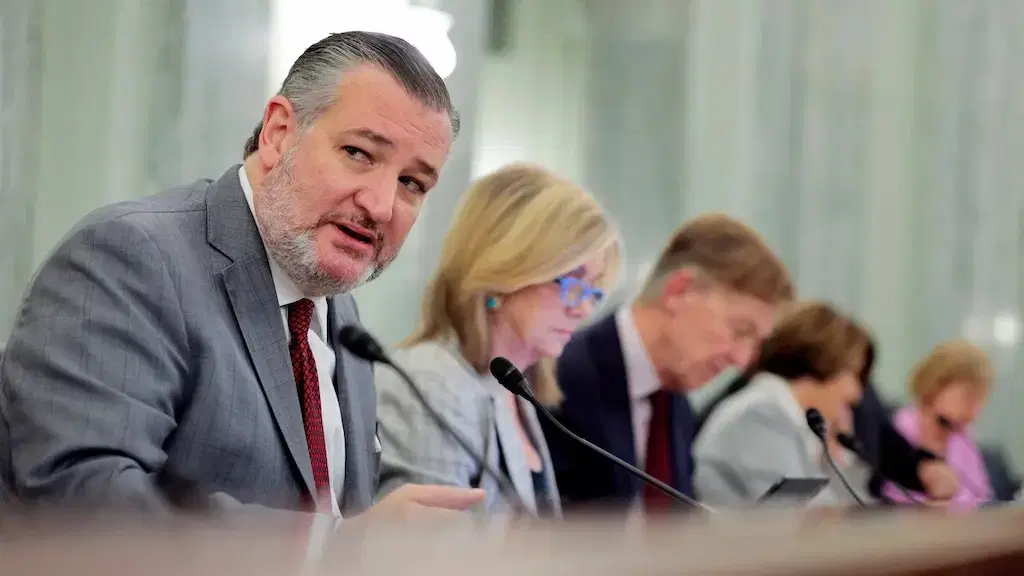
US Senator Ted Cruz plans to introduce legislation requiring prediction-market operators to obtain state or tribal authorization before offering event contracts tied to gambling activities, including sports.
The proposal could reshape the regulatory landscape for platforms such as Kalshi, which currently offer sports-related contracts under federal oversight. Cruz intends to introduce the bill after the November 3 midterm elections, according to Bloomberg Law.
The legislation comes as federal courts disagree over whether states can restrict these markets under existing gambling laws.
Cruz Proposal Would Require State or Tribal Approval
The proposed legislation would prevent prediction markets from offering gambling-related event contracts without permission from the relevant state or tribal government. Rather than imposing a nationwide ban, the bill would allow each jurisdiction to decide whether operators could offer these products.
Cruz has questioned whether the Commodity Futures Trading Commission (CFTC) can authorize sports contracts without respecting state gambling restrictions. During a May 20 Senate Commerce subcommittee hearing, he outlined the legal uncertainty surrounding these products.
"There is serious disagreement about whether the CFTC can unilaterally allow prediction markets to offer sports events contracts pursuant to the Commodity Exchange Act," Cruz said. "Many simply see prediction markets as a workaround to state gambling laws. The courts are split. Ultimately, unless Congress acts, the Supreme Court may have to decide the issue."
The proposed legislation would give states and tribes a clearer role in deciding whether prediction markets can offer gambling-related contracts within their jurisdictions.
Texas Examines Prediction Markets as Legal Pressure Builds
Texas could face significant consequences if Congress adopts Cruz's proposal. The state prohibits conventional sports betting, while platforms such as Kalshi offer sports-related event contracts under federal regulation.
Earlier this year, Texas Lt. Gov. Dan Patrick directed the Senate State Affairs Committee to examine prediction markets and potential gambling-law loopholes. The committee subsequently held a public hearing on September 15. The hearing considered whether these platforms undermine state gambling restrictions and create risks for sports integrity.
During the hearing, representatives from Kalshi and the American Gaming Association presented competing views on how Texas should approach the industry. Gaming representatives urged lawmakers to apply existing gambling laws, while Kalshi defended its products as federally regulated financial contracts.
The discussion also raised the possibility of state-court litigation and legislation clarifying whether sports event contracts constitute illegal gambling under Texas law. However, the committee's review does not itself prohibit prediction markets, and Texas has not filed a comparable state lawsuit against Kalshi as of October 23.
Notably, these developments could influence the future of Texas gambling regulation.
Kalshi Faces Conflicting Court Rulings
Meanwhile, prediction-market operators face mounting legal challenges elsewhere in the country. Federal appeals courts have reached different conclusions about whether the Commodity Exchange Act prevents states from enforcing their gambling laws against sports-related contracts.
In April, the Third Circuit ruled in Kalshi's favor in its dispute with New Jersey. The court found that Kalshi was likely to succeed in arguing that federal law preempted the state's enforcement action.
However, the Ninth Circuit reached a different conclusion in August regarding Nevada's gambling laws. In September, the Sixth Circuit also rejected Kalshi's position in litigation involving Ohio and Tennessee.
New Jersey has asked the US Supreme Court to review its dispute with Kalshi. The conflicting decisions have increased uncertainty about how federal derivatives regulation interacts with state gambling authority.
Bill Could Reshape the US Prediction Market Landscape
Cruz's proposal could significantly affect prediction-market operators that rely on nationwide access to reach customers.
Eilers & Krejcik Gaming estimated that Texas and California accounted for 43% of Kalshi's volume. The research firm also estimated that states without legal online sports betting collectively generated 69% of its volume, according to industry reporting.
If the legislation becomes law, operators could need separate authorization before offering gambling-related contracts in each relevant jurisdiction. This approach would bring sports prediction markets closer to the state-by-state framework governing US online sportsbooks.
However, the bill's prospects remain uncertain. Cruz plans to introduce the measure after the midterm elections. This leaves limited time for Congress to act before the 119th Congress ends in early January 2027.
Until lawmakers establish clearer rules, prediction-market operators and state regulators will continue contesting who has the authority to oversee sports-related event contracts.
Betting Industry News Betting Industry News Betting Industry News Betting Industry NewsMore Industry News
MD Sports Betting: Sept Handle $652M, Revenue Down 20%

New Brunswick Eyeing Private iGaming Market

New Jersey Mandates Data-Driven Gambling Checks
Pennsylvania Sports Betting Revenue Jumps 50.45% in September

Jonathan Rodriguez
Jonathan is an avid basketball fan, and is often looking forward to the next upcoming NBA season when not checking players' stats during games. He also likes to keep his ears on the ground for the latest rumblings in the online casino industry.
This site contains commercial content. We may be compensated for the links provided on this page. The content on this page is for informational purposes only. Betting News makes no representation or warranty as to the accuracy of the information given or the outcome of any game or event.