NY Bans State Employees from Prediction Markets

Written by: Jonathan Rodriguez
Published: Mon Apr 27, 2026, 11:00 am ET
Read Time: 3 minutes
industry
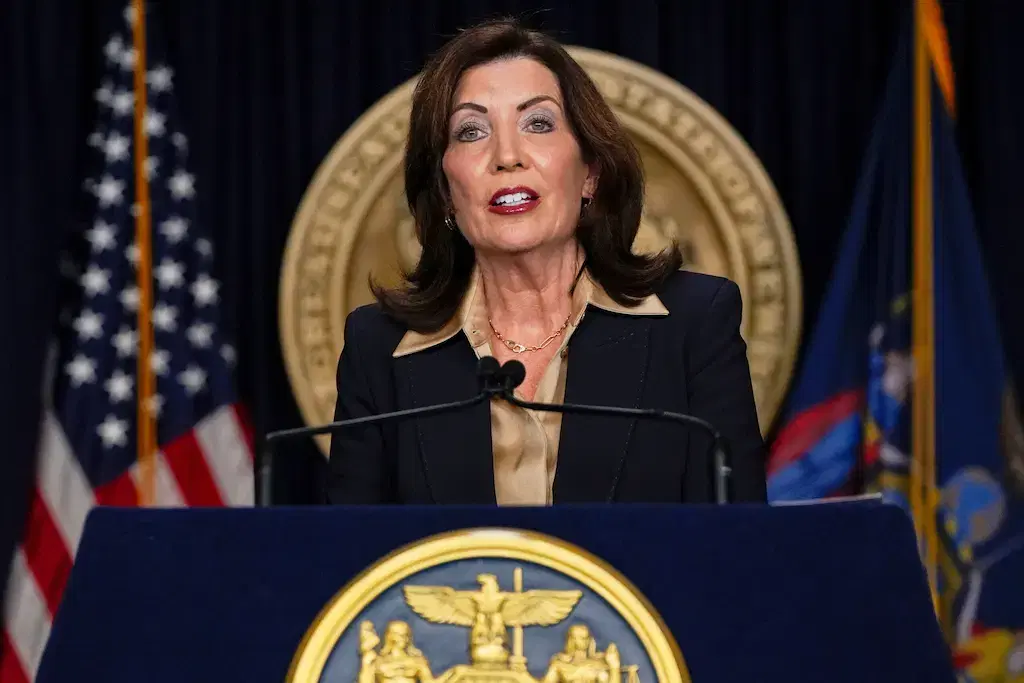
New York Governor Kathy Hochul has issued Executive Order 60, strengthening restrictions on state employees using prediction markets.
The order specifically prohibits employees from using nonpublic government information to trade on event-based contracts. However, it does not impose a blanket ban on participation using public information.
The move comes as prediction markets grow alongside US online sportsbooks, raising new concerns about fairness and ethics. Moreover, officials say the order is designed to prevent conflicts of interest before they occur. It also reinforces existing state ethics standards for public workers.
Prediction markets allow users to trade on real-world outcomes, including elections, economic reports, and geopolitical events. However, regulators worry that government employees could gain unfair advantages through access to confidential data. Therefore, New York is tightening rules as the industry expands and becomes more politically sensitive.
Why Governor Hochul issued Executive Order 60 on Prediction Markets
Governor Hochul introduced Executive Order 60 to address insider trading risks linked to emerging prediction markets. The rule bars state employees from using confidential information for personal trading advantages. Additionally, it explicitly bans "tipping," meaning employees cannot pass nonpublic information to friends or family for trading purposes.
This includes indirect participation through third parties. For example, employees cannot ask spouses or acquaintances to place trades based on inside knowledge. As a result, the order closes potential loopholes that could undermine enforcement efforts.
Officials cited growing concerns about sensitive events being reflected in prediction market activity. In some cases, large wagers have appeared around geopolitical flashpoints and policy-sensitive developments. These patterns have intensified scrutiny from regulators and lawmakers.
Furthermore, state officials stressed that even perceived misuse of insider knowledge could damage public trust. Consequently, the order focuses on prevention rather than punishment after violations occur.
The policy also reflects broader tensions in New York gambling oversight. While prediction markets differ from traditional betting systems, they still involve financial stakes tied to uncertain outcomes. Therefore, regulators are applying stricter ethics standards as the sector develops.
Industry and Policy Response
Prediction market operators have responded by expanding compliance and surveillance systems. They are increasing monitoring of suspicious trading activity and reinforcing insider trading prohibitions. Moreover, companies argue their platforms function more like financial exchanges than gambling products.
However, critics remain concerned about enforcement gaps. They argue that even strong platform rules may not fully prevent misuse of sensitive government information. As a result, regulatory pressure continues to rise across multiple states.
In addition, federal oversight remains unsettled. The Commodity Futures Trading Commission (CFTC) is currently in a jurisdictional dispute with states like New York over authority to regulate prediction markets. This "turf war" centers on whether these platforms should be treated as financial derivatives or gambling products.
Meanwhile, several US states have introduced similar restrictions on government employees. Illinois has already moved to limit insider-related risks in prediction markets with an executive order from Governor JB Pritzker.
Bigger Picture: Expanding Regulatory Scrutiny in the US
Across the country, prediction markets are facing increasing scrutiny as hybrid financial-gambling platforms. They combine speculative trading with real-world outcomes, creating complex oversight challenges.
Furthermore, states are focusing on ethics safeguards to prevent misuse of government information. Regulators are especially concerned about elections, military events, and economic indicators being influenced by insider access.
At the same time, growth in the sector continues alongside US online sportsbooks, adding momentum to regulatory debates. As state and federal authorities compete over jurisdiction, prediction markets are entering a more tightly controlled policy environment.
Betting Industry News Betting Industry News Betting Industry News Betting Industry NewsMore Industry News
MD Sports Betting: Sept Handle $652M, Revenue Down 20%

New Brunswick Eyeing Private iGaming Market
Sen. Ted Cruz Bill Targets Federal Sports Prediction Markets

New Jersey Mandates Data-Driven Gambling Checks

Jonathan Rodriguez
Jonathan is an avid basketball fan, and is often looking forward to the next upcoming NBA season when not checking players' stats during games. He also likes to keep his ears on the ground for the latest rumblings in the online casino industry.
This site contains commercial content. We may be compensated for the links provided on this page. The content on this page is for informational purposes only. Betting News makes no representation or warranty as to the accuracy of the information given or the outcome of any game or event.