Ninth Circuit Questions Prediction Markets Legal Basis

Written by: Jonathan Rodriguez
Published: Mon Apr 20, 2026, 10:00 am ET
Read Time: 3 minutes
industry
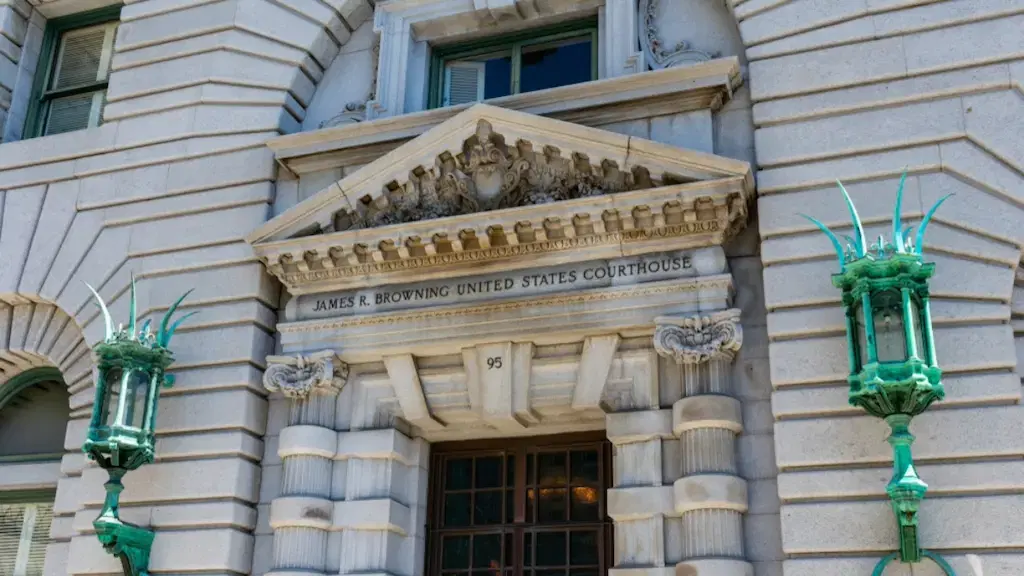
The Ninth Circuit Court of Appeals examined prediction markets in a closely watched hearing involving Nevada gambling regulators. Judges expressed deep skepticism toward claims that event contracts qualify as federally protected financial instruments.
Moreover, the case raised broader concerns for US online sportsbooks and emerging trading platforms. At issue is whether prediction markets belong under federal financial oversight or state gambling regulation. Nevada authorities argue these platforms mirror betting systems and must follow Nevada gambling laws.
Meanwhile, operators claim federal law preempts state enforcement under the Commodity Exchange Act (CEA).
Ninth Circuit Judges Push Back on Market Structure and Legal Claims
During arguments, judges questioned whether prediction markets truly function as regulated financial exchanges. Lawyers for prediction markets argued their systems use peer-to-peer trading and a limit order book. They compared this structure to stock exchanges rather than sportsbooks.
However, Judge Ryan Nelson rejected this distinction outright. He called the argument "sophistry" during oral questioning. Nelson argued that the platform still acts as the "house" in practice.
He added that the operator sets rules and facilitates all transactions. Therefore, he suggested the structural label does not change the gambling nature.
Judges also questioned claims that event contracts qualify as swaps under the CEA. In addition, they doubted arguments that federal regulation fully blocks state gambling oversight.
The panel appeared concerned that accepting these claims would weaken traditional state authority.
Notably, the CFTC filed an amicus curiae brief supporting prediction markets. However, judges challenged CFTC representatives directly during the hearing. They questioned why the federal agency defended a sector it historically tried to restrict. This exchange added tension between regulators and the judiciary.
Nevada regulators also highlighted enforcement actions in the state. They pointed to the extended ban on Kalshi operations in Nevada gambling markets. This move reinforced ongoing uncertainty around platform legality.
Federal vs State Authority and the Preemption Dispute
The central legal conflict involves federal versus state authority over prediction markets. Operators argue for "field preemption" under the CEA. They claim the CEA is so comprehensive that it excludes state regulation entirely. However, judges appeared skeptical of this sweeping interpretation.
Instead, the panel suggested states retain strong "police powers" over gambling. They emphasized that sports wagering regulation traditionally belongs to state governments. Therefore, they questioned whether federal law can fully displace Nevada gambling authority.
What Comes Next for Prediction Markets and Regulation
The Ninth Circuit now faces a decision with wide regulatory consequences. It could limit field preemption claims or reinforce state gambling authority. Alternatively, it may clarify the boundary between financial derivatives and betting products.
The ruling could reshape US online sportsbooks and event-based trading platforms. It may also influence future fintech products tied to real-world outcomes.
Moreover, it could redefine how regulators treat prediction markets nationwide. As a result, the industry now awaits a decision with significant legal and commercial impact.
Betting Industry News Betting Industry News Betting Industry News Betting Industry NewsMore Industry News
MD Sports Betting: Sept Handle $652M, Revenue Down 20%

New Brunswick Eyeing Private iGaming Market
Sen. Ted Cruz Bill Targets Federal Sports Prediction Markets

New Jersey Mandates Data-Driven Gambling Checks

Jonathan Rodriguez
Jonathan is an avid basketball fan, and is often looking forward to the next upcoming NBA season when not checking players' stats during games. He also likes to keep his ears on the ground for the latest rumblings in the online casino industry.
This site contains commercial content. We may be compensated for the links provided on this page. The content on this page is for informational purposes only. Betting News makes no representation or warranty as to the accuracy of the information given or the outcome of any game or event.